personalities.. 9 recommendations and initiatives of the World Health Forum in Rome
The Global Health Forum, called by the European Corporate Council for Africa and the Middle East (ECAM) in Rome, came out with 9 important recommendations and initiatives, during a collaborative gathering of the world''''s most strategic thinkers, who focus on the Council''''s role in the vital axes of shaping pluralism in the post-pandemic world. , healthcare, public-private partnerships, research and development, and economic stability, to make the future and development programs more sustainable through healthcare initiatives, creativity and constructive constructive cooperation, sponsored by the Italian San Donato Group and chaired by Kamal El Ghribi, President of ECAM.
The World Health Forum resulted in 9 results, recommendations and initiatives, the most important of which were: The establishment of a full partnership with the private sector has become mandatory to activate its role in health care services within the national vision and global trends of health systems, and all efforts must be made by governments for the private sector to play the expected role And active and distinguished in the provision of health care (diagnosis - treatment - rehabilitation - introduction of preventive technology - pharmaceutical industry, etc.) and in the development and formulation of policies and research.
The forum also recommended removing all obstacles and barriers to help enhance the role of the private sector in providing high-quality health services by creating an appropriate competitive environment in this field in the context of transparency, accountability and social responsibility, and enhancing the role of the private sector in developing health leadership and human capital, and building policy-making. On certain research and studies, and work to promote effective partnership between the public and private sectors to improve health services at various levels to meet the challenges facing the health system, e-partnership and equitable distribution of health services, with emphasis on the importance of laying foundations, controls, and legal, legislative and administrative systems, and activating the necessary mechanisms to consolidate the concept of Partnership between all parties involved in health strategies.
The recommendations followed by emphasizing the need to develop a positive relationship between health service providers in the public and private sectors with all media sectors. To contribute to building and enhancing citizens’ confidence in the health services provided, and to transfer and exchange modern concepts within health programs and activities in the private sector, such as sustainable care systems and health innovation initiatives, and the use of quality concepts and approaches, patient safety, risk management and infection control in health facilities, with the establishment of a twinning mechanism between hospitals. To enhance the concept of partnership, develop health services and exchange relevant experiences.
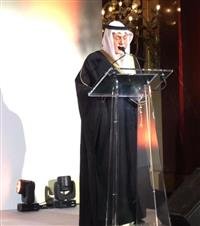
The forum witnessed a pioneering lecture on the determinants and possibilities of strengthening the role of the private sector in comprehensive and integrated health care and making the health system more flexible and sustainable, delivered by Professor Tawfiq bin Ahmed Khoja, Secretary-General of the Arab Hospitals Federation. During the summit sessions, thought leaders exchanged best practices, tools and prospects for cooperation to mobilize investments. required in the healthcare sector to achieve a more critical global goal.
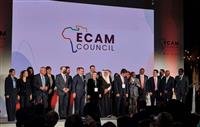
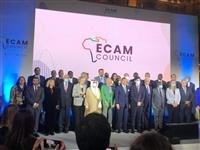
The opening of the Global Forum was attended by Prince Turki Al-Faisal Al Saud, Professor Tawfiq Khoja, Secretary-General of the Arab Hospitals Union, Dr. Nayef Falah Al-Hajraf, Secretary-General of the Gulf Cooperation Council, Dr. Tedros Adhanom Ghebreyesus, Director-General of the World Health Organization, and Luigi Di Maio (Minister of Foreign Affairs and International Cooperation in Italy ), Felix Tshisekedi (President of the Democratic Republic of the Congo and President of the African Union), Ilir Meta (President of the Republic of Albania), Uhuru Kenyatta (President of the Republic of Kenya) Salva Kiir Mayardit (President of the Republic of South Sudan), Tony Blair (CEO of the Institute for Global Change), and a number of From the ministers of health in the countries of the world, experts and scientists, including more than 200 personalities from different countries of the world.
It is worth noting that the European Business Council for Africa and the Middle East sees one of the most important solutions being to build a strong system of multilateralism that guarantees lasting peace and cooperation, and the path looks to multilateralism in addressing the lack of global vaccination, new models for international cooperation, and effective responses to protect developing and weaker countries, and that bringing Investments is an essential part of meeting the needs and opportunities of stakeholders in Europe, Africa and the Middle East Drawing on lessons learned, investment priorities revolve around global and regional resilience where leaders can respond proactively to changing health emergencies, and the Council also aims to promote and develop constructive dialogue, new partnerships and strong cooperation between Europe, Africa and the Middle East and North Africa region, with Italy taking the role The host country, and that dialogue and cultural awareness are not only the pillars of the stability of social, economic and political systems They are also key to conflict resolution and political impasse, and the council''''s ambitious goal is to contribute to the improvement of international relations through a series of annual high-level summits that bring together dedicated and innovative individuals, governments and organizations who are willing to facilitate open and honest dialogue on issues such as health care, education and enterprise. Funded by charitable donations.
The forum also aims to take concrete steps towards encouraging investment between Europe, Africa and the Middle East in many areas, with special emphasis on healthcare in all its aspects and at all levels.