
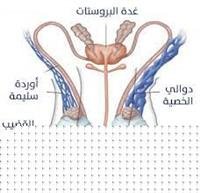
A varicocele is an enlargement of a vein or several veins in the scrotum similar to varicose veins that appear in the legs or other places in the body. We find this phenomenon in approximately 10% of men and 30% of men with fertility disorders.
In 90% of cases, varicose veins appear on the left side, but in about 10% they are bilateral, and only in a few cases do they appear on the right side alone.
Varicocele symptoms
A varicocele appears as a bulge in the upper scrotum that can be felt during a physical examination. It is sometimes prominent and can generally be seen with the naked eye when standing according to its size. In most cases, varicoceles do not cause symptoms, but in cases where they cause pain, the pain is characterized by: Come:
Unexplained pain or tenderness in the testicles, even very severe pain.
A defect in male fertility.
The pain gets worse when you sit, stand, or do physical exertion, especially if it''s for a prolonged period.
The pain gets worse during the day and peaks at night.
The pain subsides when lying on the back.
Varicoceles have a tendency to enlarge over time, becoming palpable and bothersome.
Varicocele causes and risk factors
The exact cause of varicocele fertility disorder is not yet known. Several mechanisms have been proposed to explain it, the main ones being:
Hyperthermia: The temperature surrounding the testicles increases due to the accumulation of blood in the dilated testicular veins.
Accumulation of harmful substances: they harm the development of the testicles or the production of semen in the absence of adequate blood drainage from the testicles.
Damage to the valves of the veins: the valves contribute to the return of blood from the testicle to the body, and as a result, venous congestion in the testicle occurs continuously, which leads to the enlargement and expansion of the veins.
Age: Varicoceles tend to occur in adolescence, 15-20 years more often than any other
Another stage in life. Varicocele
Most often varicocele occurs in the left testicle This is because the vein of the left testicle is located at a more vertical angle compared to the vein of the right testicle, which is located at an angle that facilitates the process of draining blood, despite that, the varicocele in the left testicle causes damage to the process of sperm production in the right testicle.
Varicocele complications
The most important complications associated with varicocele are
1. Retraction of the testicle
The bulk of the testicle consists of a series of tubes that produce sperm cells. These tubes are damaged when the production of sperm cells is damaged, which leads to the testicle shrinking.
One of the explanations for this condition is that due to the accumulation of blood in the testicle, this leads to a greater effect of toxic substances, which leads to cell death.
2. Completely reduced fertility
The ideal temperature for testicular cells to work is 35 degrees Celsius, so the testicles are located in the scrotum outside the body.
The main objective of the network of veins in the testicle is to cool the testicle and prevent its temperature from rising, so it is likely that the testicular temperature will rise when the blood flow in the testicle becomes slower than normal due to the varicocele, which will limit the movement of sperm cells and decrease their quantity.
Varicocele diagnosis
Most cases of varicocele are diagnosed in the early stages, where the diagnosis is made after the patient complains of heaviness in the testicle or when the patient notices a change in the shape of the testicle, and the diagnosis is made as follows:
1. Physical examination
Diagnosis is made by the doctor through
Inquire about low fertility in men.
When the doctor feels the testicle, then he feels the presence of a lump that does not cause pain when touching it, but if the varicocele is too small for the doctor to feel when touching the testicle, the doctor asks the patient to raise the pressure in the abdomen as we do when we want to defecate, this process called maneuver Valsalva maneuver reduces venous return to blood vessels and thus enlarges the varicocele and can be palpated.
2. Photography media
Through ultrasound examination, we can receive a comprehensive picture of the testicle so that we can confirm the presence of varicocele. In addition, this examination allows the possibility of determining the cause responsible for this condition, such as the presence of a tumor in the spermatic cord that leads to the emergence of varicocele.
Varicocele treatment
Not all cases of varicocele are treated. The cases that are treated are when the varicocele causes pain and testicular atrophy, or when it leads to fertility disorders.
Surgical treatment of varicocele centers around blocking the dilated vein in the testicle and returning blood flow to normal, although the effect of surgery on fertility has not yet been known. Treatment methods include:
1. Open surgery
This method is the most common so that the testicle is reached through an incision in the abdomen or groin. The surgery is performed under local or general anesthesia, and during surgery, a microscope is used to reduce as much as possible the possibility of complications.
The recovery process after surgery is fast and the pain caused by this process is minimal.
2. Laparoscopic surgery
In this surgery, a small incision is made through which a small camera is ed, and another incision is made to the surgical equipment, but this surgery is rarely performed because it is associated with anesthesia and has more complications than open surgery.
3. Percutaneous embolization
A radiologist intervenes to perform this surgery. During this procedure, a catheter is ed into the veins, so that we see on the radiograph that the catheter is in a place where we can release small stents to block the expanded vein.
This surgical method is not widely used Because it is more complex than other methods and it is more dependent on the occurrence of complications.
4. Other treatments
If the varicocele causes slight discomfort and does not require surgery, the following may be used:
Regular pain relievers for pain relief.
Elastic underwear that supports the testicle, which reduces congestion in the veins.
Varicocele prevention
There is no way to prevent varicocele.