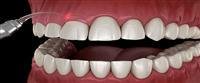
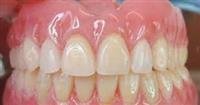
Gum disease, characterized by redness, bleeding and swelling in them. It is not usually accompanied by pain in the early stages, and with its development it may affect the bone supporting the tooth, which leads to its erosion and ends with movement of the tooth and its dislocation.
Healthy gums are tight, pink and pale, but when inflamed, they become swollen and dark red in color and bleed easily. The problem of the disease is that it is usually not accompanied by pain in its beginnings, and other symptoms may be neglected by the person, especially if he did not take care of the health of his mouth and teeth at all, which filters the disease to develop and extend to the alveolar bone supporting the teeth.
the reasons
Lack of oral and dental care and neglect of brushing and flossing play a key role in the emergence of gingivitis. Not brushing the teeth leads to food residues remaining in the mouth, which gives the bacteria on the teeth the necessary food for them to feed on, producing acids. Acids, sugars (food residue), bacteria and saliva form a layer called plaque on the teeth.
If this layer is not removed by brushing, then within 48 to 72 hours it begins to calcify and harden, forming dental tartar, which is a hard layer that cannot be removed by brushing, but must be cleaned by the dentist.
The survival of bacterial plaque and tartar on the teeth and gums leads to scratching the gum tissue, which leads to its inflammation, which begins simple and in the soft tissue (gum only), then extends to the hard tissue (alveolar bone) that begins to erode and melt, which leads to the retraction of the bony abutment of the tooth and begins Teeth move and then fall out. Gingivitis may also be associated with sensitivity in the roots to their exposure, and pus may form and severe pain occur.
Symptoms
swollen gums
Gum color changed from pink to dark red.
The gums lose their firmness and become soft.
The gums become easy to bleed, and the patient usually notices blood when he wakes up from sleep or while brushing his teeth or using medical floss.
As the disease progresses, the patient may feel pain.
Regression of the gums (i.e. their receding and lowering, which exposes the root of the tooth).
Bad breath (halitosis).
Risk factors
Consumption of tobacco and its derivatives such as cigarettes and hookah.
Poor oral and dental hygiene.
diabetic.
Dry mouth, a condition in which the production of saliva in the mouth decreases. Saliva washes away bacterial acids from the mouth and contains antibacterial antibodies, so low secretion increases the risks of gingivitis and tooth decay as well.
Malnutrition.
pregnancy.
aging
Complications
In its advanced stages, periodontitis leads to regression and erosion of the alveolar bone surrounding the teeth.
Eating collects between the teeth due to the melting of the bone and the receding of the gums.
Teeth movement and then extraction.
Studies show that advanced periodontitis is associated with an increased rate of heart attacks, strokes and lung disease, but the mechanism is not fully understood.
It is also believed that pregnant women with advanced gingivitis are more likely to give birth prematurely and give birth to babies with lower birth weight, compared to those with healthy gums.
protection
Brush your teeth at least twice a day with fluoride toothpaste, or as recommended by your doctor. This will also protect your teeth from decay.
Ideally you should brush your teeth after every meal.
Brush your teeth with dental floss at least once a day.
Use a soft toothbrush, and do not use a hard brush because it scratches the teeth and injures the gums, and it does not remove hard calcifications that need to be cleaned by the dentist to remove them.
Change your toothbrush every three or four months.
Visit your dentist periodically at the rate he advises you.
Brush your teeth at the dentist according to his recommendations, and usually dentists recommend brushing every six to 12 months.
Do not use toothpicks or leaves to remove waste, as they dig holes in the gums and lead to their receding and erosion, and lead to the formation of spaces between the teeth in which food collects, but use medical floss to clean between your teeth.
Your doctor may recommend that you use a special mouth rinse.