replacement of the damaged part of the knee joint only
Osteoarthritis (damage to the surface layer of cartilage) in many patients affects only part of the knee joint. The inner chamber of the knee and the area behind the patella are particularly susceptible to cartilage wear, and this is particularly the case in patients with O-leg deformity. (bow leg). For such patients, partial knee replacement is appropriate: this preserves the healthy portions of the bone and cartilage and replaces only the damaged portions of the joint.
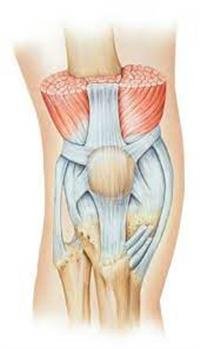
Anatomy of the kneecap
The Repicci Prosthesis is a partial knee prosthesis developed by American orthopedic doctor Dr. Dr. John Repicci. Because it covers only one of the condyles (condyle of the femur) of the femur, so it is called a monocondylar prosthesis for the knee, and it consists of a metallic filling on the side of the thigh that is an artificial joint with the other sliding part made of polyethylene on the tibia, and because of this Installation The Repicci prosthesis is called a ''prosthetic sled''. Thanks to the minimally invasive knee surgery, most patients can fully bear the knee joint, up to one day after the operation. Thanks to this partial knee prosthesis, one feels that movement control and coordination of the knee joint work normally, and the comfort during partial prosthesis is usually better by preserving wide areas of the healthy areas in the knee joint compared to full (total internal joint) replacement of the knee joint the knee, which often makes even normal exercise possible after knee surgery.
Who is the Repicci prosthesis suitable for?
Advantages of the Repicci Prosthesis
Who is a doctor who specializes in Repicci prostheses?
What is the success rate of knee joint wear surgery with the Repicci Prosthesis?
Preparation: What happens before knee surgery?
Awareness Dialogue by Orthopedic Surgeon and General Practitioner
Partial knee prosthesis operation
How is the Repicci prosthesis fitted?
What type of anesthesia is appropriate for a Repicci prosthesis?
Should I expect pain after knee surgery?
What should be considered after the operation?
What about a stay in a joint hospital?
How much does a Repicci prosthesis cost?
Can I use the Repicci prosthesis?
How can I as an international patient get an appointment for partial knee replacement surgery?
Who is the Repicci prosthesis suitable for?
The Repicci prosthesis allows treatment of localized cartilage damage in the knee while preserving the joint, so that the knee joint can be loaded directly after the Repicci prosthesis is installed. Thus, this method offers a special advantage for younger patients and those with active sports over total knee replacement. A significant portion of the natural knee joint (about 80%) is preserved. Diseases that can be successfully treated with the Repicci prosthesis include, for example, Morbus Ahlbäck (osteonecrosis of the knee joint), osteoarthritis (erosion of the cartilage surface of the knee joint) or osteochondral lesions (damage to the bone below the cartilage) However, the Repicci Prosthesis is not suitable for treating extensive bone or cartilage damage in the knee joint. Due to its relatively long shelf life of 10 to 15 years, the Repicci prosthesis is increasingly used, especially in younger patients, and can delay by several years or even prevent total knee replacement.
Advantages of the Repicci Prosthesis
Pain Reduction
The ability to download immediately
Minimally invasive surgery
Preserve the ligaments
Maintain normal proprioception ("knee feeling")
A bone-preserving surgery that provides an ideal platform for a total knee replacement
Maintain natural movement
short treatment period
Long shelf life
Delayed complete knee replacement
Almost all sports can be done
Suitable for allergy sufferers
Low risk of infection and risk of complications due to it being a small surgery
Shorter treatment period after the operation compared to total knee arthroplasty