
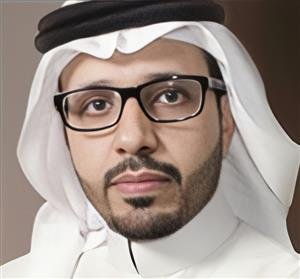
From aspiring medical student to director of the Urology Program at the Canadian University of Manitoba..
Each of us chooses a path in his life to follow. He may set a low ceiling for his ambitions, thinking that life will not be more favorable to him than this. But he may pay attention to the success stories of people who went through similar circumstances to him, but they were determined and trusted in God and were accomplished by God’s grace to tell him that there is no limit to the ambition of great souls. We report to you this meeting with Dr. Turki Al-Aysari to tell us about his success story:
-Can you introduce yourself?
Turki Al-Issawi, MIS & endourology consultant.
Assistant Professor, University of Manitoba, Canada
Head of the training program for Urology at the University of Manitoba,
(to July 2014)
We decided to come home and I recently joined Saad Specialist Hospital in Al-Khobar.
A graduate of King Saud University in Riyadh, I did training in Urology at the University of Manitoba, Canada. Then a subspecialty in Laparoscopic Surgery from the University of Toronto, Canada.
Thankfully, we succeeded in joining the academic staff at the University of Manitoba and university hospitals, and then I became the head of the Urology Training Program at the university.
She recently obtained a Master of Business Administration (physicians executive MBA) from the University of Tennessee, USA.
How did you get admission in Canada?
My story was a little complicated. I was one of Aramco''s scholarship students. One of Aramco''s conditions is that we must go to America to study at Kaplan. We were supposed to study in Chicago in the summer of 2003. There was a delay in the issuance of the American visa. The course started, and my colleagues traveled to Chicago and my visa did not come. After an effort, it was agreed to cancel my travel to Chicago and to apply to programs in Canada. The submission was late. I sent my papers around October.
I got interviews at the following universities respectively: Manitoba, Dalhousie (Halifax), and Miguel. Thankfully, I got accepted the day after my first interview. I told them that I accepted their offer.
I had done a simple study of the universities and cities that I could join, and Manitoba was at the top of the list based on certain criteria I set.
Among those criteria were
1. Hand on experience (surgical volume) earlier in residency
2. Cost of living
3. Faculties-residents relationship (how healthy is the environment?)
4. Academic curriculum …etc
Thankfully, I joined the program in July 2014.
What is the biggest challenge you faced in getting admission?
The number of competitors (number of applicants). There was a group of young Saudis and Libyans, with some young men from the Gulf countries.
What was the biggest challenge you faced during the fellowship programme?
1. Beginnings are always difficult. A different environment, a new atmosphere, alienation...etc.
2. The psychology of some professors, residents, patients...etc
We are not Canadians. Sometimes you feel the band.
But at the same time, they appreciate hard work. And we must know that we are here in Canada to get excellent training and also get a fellowship at the end of the training. It is necessary to focus on the positives and try to use other things as a means of motivation and proof of existence.
What do you advise someone who wants to gain admission in a urology program in Canada?
Preparation starts early.
1. Diligence in the college to increase the scientific stock and then higher grades.
2. Contribute to scientific research.
3. Taking admission tests in all of Canada and America (it opens doors and options for you, as well as increases the likelihood of your acceptance)
4. Try as much as possible to make an elective period (a month or two) in a Canadian university. You would prefer to be with a program director.
5. Develop the language of conversation (communication skills) and the English language. There are several programs that can be used.
6. Master work as far as place. Not necessary but considered a bonus.
7. To remind my brothers and sisters. Since you graduated from medical school, everyone knows that you are smart enough to get into any program! But the crucial aspect here is who are you as a person to be accepted?
What I mean here is the following
1. How committed are you to the speciality you are applying for?
2. Attitude! No program director would like to have a trouble maker in the program
3. Are you teachable?
For those who start the program, everyone knows that you are PGY1, no one expects you to do anything at the level of Chef Resident. The important thing is that you learn right and evolve with time. Most young men and women have previous experience before coming to Canada. Some people who grow up do something simple because he or she is above this level.
Try to benefit from your previous experience to your advantage and not be an obstacle to you.
4. Nothing better than being “a reliable person & hard worker”.
Just a reminder
“The best way to predict your future is to it”
Everyone is different, so how can we be better than we were? I think the answer is not difficult.
Your story is a source of pride for Saudis. How did you become the director of the urology program at a prestigious Canadian university?
God bless you above all. I think it started from the first day I joined the Crescent. Thankfully, my reputation was very excellent in all departments. I have made many contributions to the training of university students, and to the Junior Resident.
Administratively, I was responsible for non-Canadian scholarship students at the university.
At first I had no intention of staying in Canada after graduation. The head of the department and the head of the program told me that I would welcome him in the department if I wanted to come back one day.
After a year of subspecialization in Toronto, and my resignation from Aramco, I wrote to the department at the University of Manitoba and was appointed assistant professor and consultant at university hospitals. There was no vacancy but they d it.
After about a year and a half, the head of the department resigned and the head of the program became the head of the department. And then I was one of the candidates to head the program with two other professors. I was chosen as the head of the training program by a committee formed from the university.
-How would you describe your experience?
I benefited a lot from it. Canadian universities and the Royal College have a lot of experience in training doctors and building the health edifice in Canada. It took a lot of my time, but it was fun and useful.
We hope that our health facilities in the Kingdom will benefit from what Canada has achieved in this field and try to focus on our existing programs in Saudi Arabia. Hopefully we can reach self-sufficiency someday.
How did you choose your candidates, what makes a good candidate in your opinion?
As I said earlier. We know the applicants are smart enough. But a good candidate is
1. Who has excellent communication skills
2. Committed to the specialty.
For example, doing research. Spent an elective period in prestigious places.
3. Teachable
4. If applying for surgical specialities, good surgical skills.
We usually write this point in the recommendations that we write to students.
5. Good recommendation letter
This point is very important to you, my dear.
1. Most of the recommendations are general (not private), which does not mean anything to me and I do not pay attention to them.
2. Recommendations that the applicant sees (such as the recommendations that the applicant sends with the CV)
This also loses a lot of its credibility, even if it is very excellent.
Recommendations must be sent directly to the program president without the applicant knowing them.
The best way here to make sure that the recommendation is not bad for you and does not harm you is to ask the doctor who will write the recommendation for you if he can write you a recommendation that will help you with acceptance.
I.e : Do you think Dr. you can write me a good recommendation letter to help my application for residency?
Is there admission for Saudis in the tract program at your university? What about other majors?
Not in urology. The field is only open to Canadians. There is a desire to open the door to non-Canadians in the near future. And I expect this in most universities because of the new report of the Royal College. This report concludes that there are no jobs for Canadian graduates. The best solution is to train fewer Canadians and cover the expected shortfall in the number of residents by training foreigners.
The general, visceral, pediatric, obstetrics and gynecology, physical medicine & rehabilitation programs accept non-Canadians.
What do you advise those who have not been lucky enough to be accepted?
Enroll in a local programme. Of course, this increases the likelihood of you being accepted in the future, while at the same time not wasting your time waiting. If you are not successful in admission, you can enroll in the Veloship (subspecialty) programs in the future to cover the shortfall in training.
We wish you all good luck


