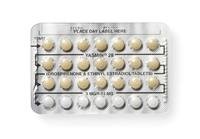
Doctors have backed OTC birth control pills in the past. A 2022 study shows that 25,000 people in upstate New York live in a county that has no health center that provides varied forms of birth control to those on public assistance.
Approximately 1.2 million people across New York don’t have ready access to a variety of birth control methods, according to new data from Power to Decide, a nonprofit that advocates for reproductive freedoms, and George Washington University.
The study found that areas described as “contraceptive deserts,” where there is no health center that offers multiple contraceptive methods for those who qualify to receive publicly-funded services, are common.
For a region to not be considered a contraceptive desert, there should be one such health center for every 1,000 people in need of birth control.
According to a new report, 25,000 people in upstate also reside in a county without close access to a clinic stocking various contraceptives, including Orleans County, Herkimer County, Schuyler County, Rensselaer County, Washington County, Madison County and Hamilton County.
Power to Decide’s study described basing the need on the location of “health centers.” It did not specify ones by name. There are federally qualified health centers that receive funds to provide primary care in underserved areas. Planned Parenthood, for example, has an office in Troy, Rensselaer County. But it is a nonprofit, and not a federally qualified health center. It’s unclear if the study took nonprofits into account in its data.
Some people in rural areas are forced to find a way to get to other counties in search of more birth control options. But lack of access also plagues parts of New York City. About 40 percent of people in Bronx County live in a contraceptive desert. The region is known for having one of the highest teen pregnancy rates in the state.
The number of contraceptive providers per person in New York is significantly low, the report adds, resembling figures seen in Texas, Mississippi and Florida. In total, there are roughly 16,000 individuals who are qualified to prescribe birth control across the state.
The study points out that in 2019, New York required that public and private insurance cover prescription contraceptives. But access to that birth control is still stunted, the study contends.
The American College of Obstetricians and Gynecologists has said that a yearly exam is not required to start someone on birth control, and should not be held up as a barrier for someone to start a prescription, the study said.