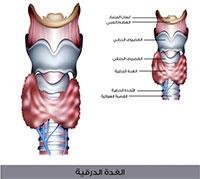
Thyroidectomy aims to completely or partially remove the thyroid gland, which is located in the front neck area, in cases of several diseases of the thyroid gland, such as: hyperthyroidism, or in cases of benign tumors or Malignant, and thyroid removal is resorted to if other drug treatments fail.
Risks of performing the operation
Thyroidectomy is associated with many risks, such as the following
Infection in the surgical incision.
bleeding
Hypersensitivity to anesthetics.
Damage to the vocal cords.
nerve injury
Parathyroid gland damage.
Before the surgery
Here are the most important things in the preoperative period
Some tests are done, such as: thyroid function test, complete blood count, blood chemistry, blood clotting functions, kidney and liver function tests.
Other tests are done to get an accurate diagnosis, such as an ultrasound of the thyroid gland and a radioisotope imaging test.
A biopsy may be taken to check for any tumors.
If the patient is elderly, he is asked to have a chest x-ray and ECG before the operation.
A doctor should be consulted regarding medications that the patient should stop taking before surgery.
You should fast for 8 hours before the surgery.
During surgery
Thyroidectomy takes two hours, and is performed as follows
General anesthesia is done.
The neck and chest area is well sterilized.
Making a small incision in the front and lower part of the neck, and after detecting the gland, the surgeon separates it from its place with the blood vessels that supply it with blood.
The doctor removes the entire gland in cases of thyroid cancer, while only one part of it is removed in cases of hyperthyroidism.
The incision is sutured, then a displaced tube is usually placed in place of the incision to drain fluid remnants from the tissues.
Post surgery
The most important things to expect after the operation are as follows
The patient usually stays in the hospital about 24 - 72 hours after surgery To make sure his condition is stable.
The drain tubes are removed within a few days, and the sutures are removed within ten days.
Analgesics can be used as needed if pain is present.
The patient may feel changes in the voice during the first days after surgery.
In cases of thyroid cancer, the patient may be required to receive complementary chemotherapy after thyroidectomy, and this is determined based on the extent of the tumor. In addition, the patient receives complementary treatment that contains thyroid hormone.
You should go to the doctor immediately if some symptoms appear, such as: severe pain, bleeding, shortness of breath, high temperature, and purulent secretions.