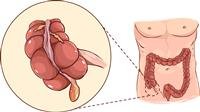

Laparoscopic surgery is a minimally invasive procedure that allows the surgeon to access cavities and internal organs in the body by making very small incisions or through natural body openings, such as the mouth, nostrils or anus.
Benefits of laparoscopic surgery
This technique allows the surgeon to see inside the patient''s body and the process through a much smaller incision than is required by traditional open surgery.
The benefits of laparoscopic surgery may include the following
Small incisions, few or even no incisions.
Less pain.
Low risk of infection.
Short duration of hospital stay.
recovery speed.
Less scarring.
Decreased blood loss.
Types of laparoscopic surgery
There are many types of laparoscopic surgery depending on the area of the body to be endoscopy, such as:
Laparoscopy.
Rhinoscopy.
Bronchoscopy.
Cystoscopy.
Colposcopy.
Hysteroscopy.
Thoracoscopy.
Arthroscopy.
Esophagogastroduodenoscopy.
Colonoscopy.
Laparoscopic surgery risks
Laparoscopic surgery is a relatively safe procedure, but it does have certain risks depending on the area in which the procedure is performed. The risks may generally include:
Excessive sedation.
Feeling bloated for a short time after the operation.
mild cramps
Numbness in the throat for several hours due to the use of a local anesthetic.
Minor infection.
Persistent pain in the endoscopy area.
Internal bleeding is usually minor and can sometimes be treated with endoscopic cauterization.
Preparing for surgery
Laparoscopic surgery does not require an overnight stay and usually only takes about an hour to complete. Your doctor will provide instructions on preparing for the procedure, such as:
An individual will need to fast for about 12 hours for many types of laparoscopic surgery although this varies with the type.
Laxatives may be taken the night before the GI procedure to empty the digestive system.
The doctor performs a laparoscopic examination before surgery.
Tell your doctor about all medications and supplements you''re taking and any previous surgical procedures.
Surgery steps
Laparoscopic surgery is usually performed when the patient is conscious with only local anesthesia, but often the patient needs to be completely sedated.
This is done by ing the endoscope, which is a miniature telescope and connected with a small video camera, into the cavity that the doctor intends to operate, such as: the abdominal cavity, rib cage, and other cavities in the body.
For endoscopic procedures involving oral entry, a mouth guard will be used to protect the teeth and lips when the tube is ed.
And through the other incisions, special surgical tools are ed that help incision and separation of tissues, ligation and connection of blood vessels and suturing of tissues as well. All surgery takes place while the surgeon watches TV that shows the components of the patient''s body instead of staring at the patient himself.
The surgeon compensates for his hand feeling of tissue by the high quality of the images taken by the camera, the magnification of the tissue and the good lighting that the endoscope contributes to.
recovery phase
Recovery depends on the type of procedure. In the case of endoscopic surgery of the upper GI tract, the patient will be monitored for about one hour after the procedure while the effect of the anesthesia wears off.
The person should not normally work or drive for the rest of the day, due to the sedative and numbing effect of the pain medication.