In certain cases, some people have to undergo open heart surgery, so why should they? What are the process steps? Is it dangerous? Learn the most important of this information now. Open heart surgery is one of the operations that frightens people the most. As soon as its name is mentioned, the features of the face change, but do you know the information about the operation?
min around?
What is open heart surgery?
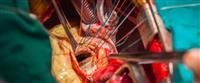
Open-heart surgery is a major operation that requires a hospital stay for a week or more. It is a common operation among adults, during which the chest is incised in order to open it to reach the heart muscle, its valves, or the arteries connected to it.
It is worth noting that the open-heart surgery is one of the traditional operations, meaning that in the modern time it has become possible to perform this operation by making a small incision in the chest without opening it completely.
When do you need open heart surgery?
The primary goal of open-heart surgery is to improve blood flow to heart muscle tissue through what is known as coronary artery bypass grafting (CABG), the most common type of open-heart surgery.
This process may be important for people with coronary artery disease, when the blood vessels that supply the heart with oxygen become narrow and stiff.
Atherosclerosis is due to the accumulation of deposits resulting from fat on the walls of the blood vessels, causing them to narrow, and thus the difficulty of blood flow through them. In this case, the blood flow to the heart decreases, and a person may suffer a heart attack.
Open heart surgery is also used in the following cases
Repair or replace the heart valves that allow blood to flow through the heart.
Repairing damage to some parts of the heart.
Implantation of a medical device that allows in regulating the heart rate.
Replacing a damaged heart with another from a donor in what is called a heart transplant.
Repair of congenital heart defects.
Open heart surgery risks
There are some risks associated with undergoing open heart surgery, as follows
Infection in the incision made in the chest area.
heart attack
irregular heartbeat
Lung or kidney failure.
Chest pain and low body temperature.
Confusion and memory loss.
blood clots
blood loss
breathing difficulties.
Pneumonia.
Allergic reaction to anesthesia.
bleeding.
surrounding blood vessel damage.
brain attack.
Preparing for open heart surgery
In the beginning, it is necessary to inform the doctor of any medication you are taking, even if it is sold without a prescription or any vitamins and herbs you are taking.
It''s also important to tell your doctor about any illnesses you have, even if it''s just a cold or the flu, and don''t forget to tell them if you''ve been drinking alcohol.
Two weeks before the procedure, the doctor will ask you to
Stop smoking and drinking alcohol.
Stop taking blood-thinning medications, such as: aspirin, ibuprofen, and warfarin.
A day before undergoing the operation, the doctor may ask you to shower with a certain type of soap that works to kill bacteria on your skin, in order to reduce your risk of infection, and the doctor may ask you to refrain from eating and drinking after midnight.
The doctor may also need to do tests before the operation, such as: heart monitoring or blood sampling, in addition to giving intravenous fluids.
How is open heart surgery performed?
Normally, open heart surgery takes 3-6 hours or more.
During the process the following is done
The patient is completely anesthetized so that he does not feel pain during the procedure.
The surgeon makes an incision in the middle of the chest, 20-25 centimeters long.
The surgeon cuts and separates some of the rib cage bones in order to expose the heart.
The patient is connected to a medical device called a heart-lung bypass machine when the heart becomes visible, as it works to transport blood away from the heart so that the surgeon can complete the operation, but in some modern operations this device is not used.
The surgeon uses a healthy blood vessel to a new path for blood to flow away from the closed vessel.
The rib cage bones are closed and the incision in the chest is sutured.
After the open heart surgery
After the procedure is completed, and when you wake up, you will notice that there are two or three tubes connected to your chest, and they contribute to the drainage of fluid from the area around your heart.
Your doctor may place a tube in your arm to feed you and another to your bladder to empty it. You''ll also be attached to a medical device that evaluates your heart''s functioning.
After the open-heart surgery, you will stay the first night in the intensive care unit, in order to receive the necessary medical care, and then you will be transferred to another room for 3-7 days.
Healing from open heart surgery
It is important to take good care of yourself after you go home, and this includes the following:
1. Take care of the wound
Taking care of the wound is very important after the operation, as it is necessary to keep the incision area warm and dry, and do not forget to wash your hands before touching them.
If you notice that the wound is healing properly and is not leaking, you can take a shower, taking into account the following conditions:
Bath time is less than 10 minutes.
Use warm, not hot, water.
Do not direct water directly to the wound area.
It is also necessary to monitor the wound constantly to make sure that it is not infected with any infection, so you should watch for the following symptoms:
Large wound filtration.
The presence of an opening in the wound.
Redness around the wound area.
high body temperature
2. Pain relief
Pain is a common symptom associated with open heart surgery, so controlling it is very important.
Your doctor may prescribe a pain reliever, so take it as directed.
3. Get enough sleep
Some patients have problems sleeping after open heart surgery, but it is important to maintain good sleep hours and relaxation. You can do this by:
Take pain relievers half an hour before bed.
Arrange the pillows under you to get a comfortable sleep.
Avoid drinking caffeinated drinks, especially in the evening hours