
Open heart surgery for children between the reasons for performing the operation and how to do it, everything that interests you on this subject can be found in this article. Open-heart surgery for children Open-heart surgery for children is performed in the event of a congenital defect in the child''s heart or an acquired injury during the child''s first years, whether the problem is in the child''s heart.
By itself or one of the very important blood vessels close to the heart.
A child usually needs one open-heart surgery, but some children need multiple open-heart surgeries.
When does a child need open heart surgery?
In some cases, open-heart surgery must be performed on the child immediately after birth, while in other cases it is more correct to wait several years for the operation.
When the child shows the following symptoms, the need for surgery becomes urgent
Blue color of the child: including the skin, lips and nails due to lack of oxygen in the blood (Hypoxia).
Difficulty breathing: This is due to the lung being filled with fluid and congestion, which leads to heart failure.
A disturbance in the child''s heartbeat: whether in its rhythm or number.
Lack of food and sleep: thus delayed child growth.
What happens in the operating room
Here are the details of open heart surgery for children
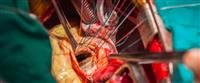
The child is placed under the influence of general anesthesia, where he does not feel pain at all.
The doctor makes an incision in the skin and then the sternum to reach the heart.
The doctor places a heart-lung bypass machine, which performs two functions
Full blood and oxygen supply to the body during open heart surgery.
Stopping the work of the heart completely while keeping its life fit for the operation.
The doctor takes the necessary action.
Preparing the child for open heart surgery
The child must be prepared psychologically and told about the date of the operation before performing the open-heart surgery for children if he is of an age that can accommodate that, in addition to the need to follow the doctor’s instructions, as follows:
Do not take any kind of liquids starting from midnight before the operation.
Stop taking blood thinners, such as warfarin, as recommended by your doctor.
Drinking the necessary medicines before the operation with a very small amount of water.
Carry out the necessary medical examinations.
Post open heart surgery for children
After open-heart surgery for children, the following is expected
The child stays in the intensive care unit for about two days, equipped with tubes to provide him with oxygen and food, and to remove urine.
The child is discharged from the intensive care room while remaining in the hospital, where the child can eat and drink on his own without the need for feeding tubes after about two days of intensive care rooms.
The child''s discharge from the hospital and his return to normal life within several weeks of the operation.
The child''s need for periodic visits to the doctor''s office every (6-12) months after the operation to ensure his safety.
Risks of open heart surgery for children
There are several risks associated with open-heart surgery for children, including
Air bubbles entering the blood.
blood clots
Pneumonia.
Heart rhythm disorder (Arrhythmia).
Heart attack.
Stroke.
Bleeding during the procedure.
microbial infection.
Respiratory disorders.
Tips for taking care of the child after the operation
Here are a few tips to follow after the procedure
Organize the baby''s meals and times, and separate feedings.
Avoid bathing the child for the time decided by the doctor.
Cover the child''s wound when exposed to sunlight even after the implant has been removed.
Follow your doctor''s directions about taking antibiotics before going to the dentist.
When should you see a doctor?
Call the doctor or go to his clinic in the following cases after the operation
The appearance of a symptom of wound infection, such as redness and swelling at the wound site.
General pain or chest pain with shortness of breath.
Skin color changes to blue or gray.
Decreased appetite.
High fever and vomiting.
heart rate disorder