
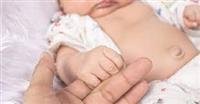
An umbilical hernia in children occurs when part of the intestine bulges through the opening in the abdominal muscles near the navel. Important information about umbilical hernia in children Among the important information about umbilical hernia in children are the following: Umbilical hernia is very common among children and can also affect adults, but b
Fewer cases, and most of the time it is not considered a serious condition.
The umbilical hernia in infants is clear, especially when there is a protrusion in the navel when the child cries, when this is one of the most important indicators of the presence of an umbilical hernia.
The umbilical hernia in children closes on its own during the first two years of the child’s life in most cases, but there are some other cases in which the hernia remains present until the fifth year of the child’s life, and in such a case the hernia may need surgical restoration after the child reaches puberty. .
Symptoms of umbilical hernia in children
Among the important observations regarding the symptoms that appear in cases of umbilical hernia in children are the following:
Umbilical hernia causes a bulge and swelling near the navel area, and most of the time this bulge can be seen in children who suffer from a hernia while crying, coughing, or feeling stressed and tired.
Umbilical hernia is painless for children, but if it continues into adulthood, the patient may feel abdominal pain.
There is a need to visit the doctor if some symptoms appear on the child that indicate an umbilical hernia, and these symptoms include the following:
Abdominal pain.
vomiting.
Pain when touching the hernia area.
Swelling and discoloration of the affected area.
The doctor should be visited if any of the symptoms indicating a hernia appear, in order to diagnose the condition and treat it immediately and prevent any possible complications.
Causes and risk factors for umbilical hernia in children
Among the important observations regarding the causes and risk factors for umbilical hernia in children are the following:
In the normal situation, the umbilical cord passes through a small hole in the abdominal muscles of the fetus during pregnancy, then the hole closes automatically immediately after birth, and the umbilical hernia appears if these muscles do not fully heal with each other, at or immediately after birth.
Umbilical hernias occur more often in infants whose birth weight is less than normal, and this condition usually occurs in males and females in an equal proportion, but it seems that black children are more likely to suffer from umbilical hernia than others.
Extensive pressure on the abdomen may cause an umbilical hernia, in cases of obesity, fluid in the abdominal cavity, previous abdominal surgery, or kidney failure.
Complications of umbilical hernia in children
Among the important observations regarding the complications that may result from an umbilical hernia in children are the following:
It is rare for any complications to occur in cases of umbilical hernia in children, but some complications can occur when retention occurs in the prominent abdominal tissues, so that it can no longer be pushed back into the abdominal cavity, and in such a case the blood flow to the retained area decreases, This leads to abdominal pain and tissue damage.
The blood supply may be completely cut off to a part of the tissue, which leads to its death, and sometimes the infection spreads to the abdominal cavity, causing a serious condition that may threaten the life of the child.
Adults with an umbilical hernia are more likely to develop a bowel obstruction than children. Therefore, immediate surgical intervention is needed to treat the condition.
Diagnosis of umbilical hernia in children
Umbilical hernias in children are diagnosed through physical examination most of the time, and in some cases some radiological imaging tests, such as X-rays or computed tomography, are used to look for any possible complications.
Treatment of umbilical hernia in children
Among the important observations regarding the treatment of umbilical hernia cases in children are the following:
Most cases of umbilical hernia in children heal on their own at the age of one or two years, and the doctor may push the protrusion into the abdomen during a physical examination of the child, and it is worth noting that parents should not do that without resorting to a doctor.
Many people claim that umbilical hernias in children can be treated by sticking a coin on the bulging area, and it is important to warn not to resort to such methods, as they can cause the transmission of germs and infection to the affected area.
There is a need to resort to surgery, in some special cases, as follows
There is severe pain in the area.
A clear swelling in the area that does not decrease until the child is two years old or more.
The hernia does not disappear until the age of 5
Retention in the tissues of the area.
Surgery is recommended to avoid potential complications. A small incision is made near the navel, then the herniated tissue is returned to the abdominal cavity and the incision in the abdominal wall is sutured to close it completely.
Prevention of umbilical hernia in children
In fact, there are no clear ways through which umbilical hernia can be prevented in children, but some things can be followed that can reduce the possibility of hernia in general, such as the following:
Maintain an ideal body weight by eating a healthy diet and exercising.
Eat enough fruits, vegetables and whole grains to avoid constipation.
Avoid lifting weights and loads that exceed a person''s ability.
Visit the doctor in case of persistent coughing or sneezing.