Lung scaling is performed on patients who have symptoms of a respiratory infection that causes a thick scab to form around the lung. Reasons for resorting to the operation The main reasons for peeling are the following: The presence of pus in the lung cavity. The presence of old blood in the chest. thoracic fibrosis pneumothorax. The methods used for the peeling process
Lung is the open method and is Video Assisted Thoracoscopy Surgery.
Complications of the operation
Complications include
Sepsis.
contamination of the surgical wound.
bleeding.
Permanent air leakage.
Fistula between the trachea and the pleura.
before performing the operation
You must inform the doctor of your general health status, whether you are taking medications on a permanent basis, and when you should stop eating. The doctor may also ask you to take some pictures and general examinations.
during the procedure
This is an open surgical procedure, which is done as follows
The surgeon makes an incision, any surgical cut, and cuts the chest. This technique allows the surgeon to view and analyze the surgical area and the extent of the disease.
The thick crust covering the lungs is exposed and removed.
Residual blood and debris in the pleural cavity is removed to prevent infection and future scarring.
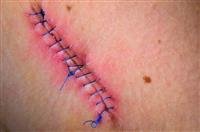
The expansion of the lungs is examined, and the skin and tissue underneath are sutured.
after the procedure
Below is a breakdown of what happened after the procedure
Patients may experience pain, swelling, and bruising.
The doctor may prescribe painkillers and antibiotics.
The average hospital stay after VATS is two to three days.
Patients move within 24 hours after surgery.
Chest physiotherapy may be recommended after surgery