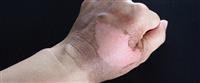

Burns are a widespread, daily occurrence where minor injuries are often spoken of. Classification of burns Burns are classified according to their degrees of severity, as each of these degrees has its own external characteristics and distinctive complications, and it may require different treatment methods, as follows: First-degree burns: No
In this case, the infection is only in the outer layer of the skin (epidermis).
Second degree burns: It is an injury to the two outer layers of the skin.
Third-degree burns: The damage reaches beyond the layers of the skin, affecting the tissues under the skin.
Fourth-degree burns: The damage reaches the very deep layers of the muscles, tendons, ligaments, blood vessels, nerves, and bones.
How to calculate the affected area
The size of the affected areas is assessed as follows
Head and neck: 9%.
Stomach and chest: 18%.
back: 18%
Each arm: 9%.
Leg: 18%.
Pubic area: 1%.
Burn symptoms
The symptoms and appearance of a burn vary according to its degree as follows
Symptoms of a first-degree burn
The affected layer of skin is usually red or swollen, but no permanent damage is expected from a burn like this.
Second degree burn symptoms
When exposed to a burn of this kind, the skin is mostly moist, and pimples may appear on it, and the burn is likely to leave a chronic scar in the place.
Symptoms of a third degree burn
When exposed to a burn of this kind, the skin is usually hard and waxy, and sometimes it is rough.
The nerve endings can be affected, causing tingling and numbness in the area of the injury.
Symptoms of a fourth degree burn
When exposed to a burn of this kind, the skin is black or charred, and the nerve injury may be so bad and severe that no pain is felt.
Causes and risk factors for burns
There are a large number of types of burns, but the most common of these types are those resulting from direct exposure to heat. Among the most important causes and risk factors for burn injury:
Exposure to fire.
Burning with water vapor.
Use of hot tools.
Sun rays.
Electrocution.
Burning due to chemicals, especially acid.
Burn complications
Burns can cause other damages other than those that affect the burn area, including
bacterial infection
The skin acts as a protective shield against the entry of harmful substances into the body, and the state of burning damages this protective shield, so that pollutants infiltrate the body, causing local pollution in the place of burning, or the infection may be more serious and cause sepsis, which constitutes harm to a person’s life .
Decreased blood volume (Hypovolaemia)
We may lose due to exposure to a state of burning a large amount of blood fluids, as a result of damage to blood vessels, and damage to the skin that protects us from fluid leakage out.
This condition can cause hypovolemia, which leads to a decrease in the amount of blood that the heart pumps to the rest of the body, and severe damage results.
Hypothermia
Skin injury may lead to the loss of a large part of the body heat, and if the body cannot provide the necessary heat in order to compensate for the lost heat after this injury, the body temperature will in a way that threatens the life of the injured person with real danger.
Respiratory disorder
Inhaling hot air and smoke can damage the respiratory system, which may cause great harm and cause many respiratory problems.
Scarring
During the normal healing process of burns, scars may sometimes appear, especially when the damaged tissue is external.
These scars may not be aesthetically pleasing, and they may limit the ability to move if they come over a joint in the body.
The process of scar formation can occur in the internal tissues as well, as the muscular and tendon tissues may go through a state of scarring that leads to their contraction, limiting the ability to move, and the occurrence of a defect in the joint itself.
Burn diagnosis
The doctor determines the severity of the burn based on the area it covers, after which he may order the following tests:
blood test.
X-ray imaging.
Burn treatment
Burn treatment depends on its depth and size, and can range from home treatment for a minor burn, to hospital treatment for a more serious burn.
1. Home treatment for burns
In order to prepare an appropriate treatment program, an assessment must first be made of the severity and severity of the injury, the extent of the burn, and the size of the affected areas.
Treatment of first and second degree burns
In the event of a first or second degree burn injury that is not spread over a large area of the body, burns can be treated at home in the following way:
Stay away from the cause of burns.
Cool the burn with water at room temperature 10-25 degrees.
Apply a moisturizing cream to prevent the burning area from drying out. It is recommended to use lotions extracted from Aloe Vera.
Cover the burn with sterile gauze. It is also important not to press too hard on the burn area.
Use of pain relievers.
Refrain from popping blisters as this process increases the risk of contamination.
Clean the place well using soap and water if the blisters burst, then apply an antibiotic ointment and bandage the burn.
In most cases, the patient does not have to see a doctor.
Treatment of third and fourth degree burns
Burning in more serious degrees, or burning in widespread areas with a diameter greater than 7.5 centimeters, or burning in the palms of the hands and feet, or if there is difficulty in breathing after inhaling smoke, you should go to receive medical treatment immediately and urgently.
Until you receive the appropriate treatment, you must ensure that
Removing the cause of burning from the affected area, such as: putting out flaming clothes, removing acids that led to burning, and others.
Ensure that the casualty is breathing, and initiate resuscitation (CPR) if necessary.
Cover the burn with a sterile bandage or clean cloth.
Do not use fabrics made of fibers, such as carpets or towels, because these fibers may stick to the burn area.
You should not neglect a doctor''s visit in these cases.
2. Medical treatment of burns
Medical treatment includes the following
Giving the patient intravenous fluids if the patient has lost a large amount of fluid.
Burn cleaning.
Antibiotic treatment to prevent the spread of infection.
Use of pain relievers.
Burn dressing.
A surgical procedure during which the damaged layer is removed and skin tissue is transplanted in its place in some very damaged cases.
Burn prevention
Burns are a common phenomenon that often occurs at home, so we must follow the following tips:
Ensure that the environment around us is safe.
Keep cigarette remnants and electrical plugs out of the reach of young children.
Prevention of sun damage.