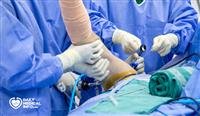
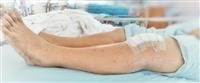
Of course, any operation related to the knee cartilage will have a great impact on the patient’s movement and daily practices. Here are the most important tips after knee cartilage surgery in this article. In the event that the knee cartilage is damaged, which leads to pain and greatly limited movement, the doctor resorts to knee cartilage replacement. And to relieve complications and zea
This is the speed of recovery. Here are the most important tips after knee cartilage surgery and other information as follows
Advice after knee cartilage surgery
Most patients recover, adapt and return to daily activities in about 3 months. You can follow some tips that help speed up treatment and prevent complications.
Here are the most important tips after knee cartilage surgery, according to the recovery stages:
1. Tips during the first to third week after the operation
After about five days, you will be discharged from the hospital, and in the first weeks you may need to help your household in carrying out your daily activities such as preparing food, taking a shower or changing clothes sometimes.
But in the event that you have to do these tasks on your own, here are some tips as follows:
Avoid wearing shorts when standing, but you must sit down to avoid falling.
Start wearing pants or socks on the affected side.
Do not sit in one position for more than 46 to 60 minutes.
Keep your feet supine and extended when sitting.
Put a chair and a rubber mat when showering to avoid falling.
Use your crutches if you have to climb stairs, and start up stairs with the uninjured foot and down stairs with the injured foot.
Lying on the back and extending the feet when relaxing to rest the knee, and not placing pillows around it so as not to restrict its movement at rest.
2. Tips during the fourth to sixth week after the operation
During the first month after the operation, you will notice a clear improvement in the movement and strength of the knee, and special exercises will help you to improve the position more and more.
And you can rely on yourself again to carry out your daily activities, and you can return to work, depending on the nature of your work, of course.
Pain and swelling may continue during this stage, so the following is recommended
Continue to take painkillers.
Continue using ice packs.
Keeping the affected member elevated.
Tell the doctor if any new pain occurs or gets worse.
3. Tips during the seventh to twelfth week after the operation
The patient returns to his normal life during this stage, so that you can practice various sports and return to driving and shopping.
Of course, the pain may come back sometimes, especially when the foot is tired, so you should:
Take medications.
Follow your doctor''s instructions.
Continuing to do special sports to improve the position of the knee cartilage further.
4. Other knee meniscus post-op tips
Other tips include
Do the special exercises indicated by the physical therapist to help strengthen the muscles around the knee cartilage and thus speed recovery.
Use ice packs, as this may help reduce pain and swelling.
Elevate the injured member for a few days after the operation.
Avoid long standing sitting, where you can walk lightly to move the foot, stimulate blood circulation and prevent clots.
Change the medical dressing regularly.
Keep the sleep process organized, avoid continuous sleep during the day, and you should change your position in bed regularly as well.
Follow up with a nutritionist to organize meals, as you may lose appetite after the operation due to pain or fatigue.
Take painkillers regularly to avoid severe pain.
Complications of knee cartilage surgery
After getting acquainted with the most important tips after knee cartilage surgery, it is worth mentioning that complications and damages after knee cartilage surgery are rare and uncommon, but they may occur in some patients, including the following:
Increased risk of infection and bleeding.
Allergic shock to narcotic drugs in some patients.
Chronic roughness in the knee.
Joint bleeding or clot formation.
Damage to the tissues or nerves surrounding the cartilage.