
people
Many suffer from vision problems, and while the problems of some are concentrated in myopia, others may suffer from other problems, such as: farsightedness, so what do we know about farsightedness? Farsightedness is a condition that makes the sufferer see things far away from him clearly, while he is unable to see things close to him with the same clarity, and here we will explain
Decipher all the necessary information about farsightedness in the following
How does farsightedness arise?
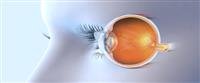
The condition of farsightedness arises in the eye as a result of the eye displaying images in the area behind the retina instead of displaying them clearly on the retina itself, which causes confusion and blurry vision.
The eye usually focuses light radiation in one area, which is the retina, which is located at the back of the eye ball, and sends an image of what the eye sees to the brain through the optic nerve.
When a person suffers from farsightedness, the eye becomes unable to focus the light rays in the correct place in the eye.
Causes of farsightedness
There are several factors and things that may cause farsightedness, such as
A flat cornea in the eye instead of the normal cornea.
An unusually short eyeball.
Weakness in the ability of the eye to focus light radiation in the right place in the eye.
Genes and hereditary factors that play a role in increasing the chances of infection.
Symptoms of farsightedness
With the emergence and development of the condition, the person needs to strain himself and his eyes to try to focus when looking at objects that are close to him, which may cause eye strain over time, and the emergence of the following symptoms:
Blurry and blurred vision, especially when looking at close objects.
A feeling of pain and burning in the area around the eye.
Constant fatigue, headache and headache.
The need to squint to see better.
Difficulty reading.
Diagnosis of farsightedness
Farsightedness is easily diagnosed by resorting to an ophthalmologist, who will subject the patient to a regular eye examination, where the patient''s ability to see letters and distant and near scenes is monitored and the degree of damage is determined.
The doctor may need to perform other procedures, such as dripping special eye s that help dilate the pupils in order to reach an accurate diagnosis.
It is worth noting here that the majority of schools around the world conduct a free and simple eye examination for their students, and whoever cannot pass it successfully is advised to go to an ophthalmologist to get the appropriate treatment.
Farsightedness treatment
After obtaining the appropriate diagnosis, there are several solutions available to treat farsightedness or at least control it and prevent it from getting worse with time, the most important of which are:
Medical glasses or medical contact lenses.
The LASIK process to correct vision, which is usually used for nearsightedness, but it can also be used to correct farsightedness, and vision correction operations of this type may include many risks, such as:
Correction of vision more or less than necessary.
Blurred vision of lighting and the halo surrounding light.
Eye infections.
Dry eyes.
And the higher the degree of injury, the greater the need to wear more powerful medical lenses.
What about the treatment of farsightedness in children?
Children with farsightedness usually do not need any kind of correction, and they may not even need medical glasses, and medical glasses are prescribed to the affected child only in the following cases:
There is a clear difference in the degrees of defect in vision between the eyes of the child.
Note that there are beginnings around the child''s eye.
The child suffers greatly and his ability to see is very weak.
Prevention of farsightedness
Often, you will not be able to take any measures that will inevitably protect you from farsightedness, but you can generally follow simple steps and rules that will help you maintain the health of your eyes, such as:
Get an annual eye exam to diagnose any vision problems early
Be careful not to neglect the health of the eyes, especially in patients with high blood pressure and diabetes, and carry out the necessary examinations.
Periodic follow-up with the doctor for those with eye diseases, such as: glaucoma.
See a doctor if any of the following symptoms appear
eye pain
redness in the eye
Strange and unusual secretions from the eyes.
Take care to read in good lighting, and avoid staring at electronic screens for a long time to protect against eye strain.