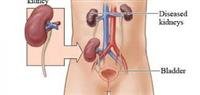

Kidney transplant Introduction: A kidney transplant is a surgical procedure that aims to place a healthy kidney from a deceased or living donor into a person with severe renal insufficiency, whether or not the patient has started dialysis. Kidney transplantation is the treatment of choice for kidney failure compared to dialysis. Types of kidney transplantation:
Kidneys from a living donor
It is done by removing the kidney from the living donor, and placing it in the body of the recipient who has kidney failure, and one kidney must be obtained from the donor To replace one of the failing kidneys.
Kidney transplant from a deceased donor
It is done by taking a kidney from a deceased person, with the consent of the family, or according to the donor card, and then it is transplanted into the body of the recipient who suffers from failure.
Kidney transplant
The kidney transplantation process is carried out by placing the new kidney on the right or left side of the lower abdomen, according to the decision of the treating team. After that, the new kidney is connected to the blood vessels in the abdomen, making sure that the blood flows through the blood vessels and reaches the new kidney. Then the team works to connect the new ureter to the bladder in the body, and the original kidneys are not removed unless the case is necessary, according to the doctor’s decision.
Contraindications for kidney transplantation
Kidney transplantation may be more dangerous than dialysis for some people with kidney failure, and cases that do not qualify for transplantation include the following cases:
Heart diseases that cannot be cured, such as: severe weakness in the heart muscle, and severe blockage in the arteries of the heart.
Bacterial or viral infection until it is treated.
Cancer, and the patient who has been cured of cancer needs to wait a period of time decided by the transplant doctor, due to the risk of the disease returning after transplantation as a result of immunodeficiency.
Mental and mental illnesses that are difficult to treat and control.
Addiction to narcotic substances.
Some immune diseases that can fail a transplanted kidney.
Kidney Transplant Risks
In the short term: risks are similar to those associated with other surgeries, such as: bleeding, blood clots, and infection, such as: urinary tract infection, colds, and flu.
In the long term: the possibility of developing diabetes, high blood pressure, in addition to an increased risk of infectious diseases and tumors Because of the immunosuppressive drugs needed by the farmer To reduce the chance of rejection of the new kidney.
General instructions after a kidney transplant
Ensure that examinations are performed and followed up regularly.
Regularity in taking medications, as they help prevent the immune system from attacking or rejecting the new kidney.
Stop smoking, as it can shorten the life of the new kidney and increase the risk of developing some types of cancer.
Follow a healthy diet by abstaining from foods that contain salts, fats, and high sugars, and ensure food hygiene.
Do regular physical activity after recovering from the effects of surgery.
Avoid contact with people who have infections, such as: the flu.
Ensuring the practice of personal hygiene, by washing hands regularly with soap and water, especially after going to the toilet, and before preparing food and eating meals.
Go to the doctor when feeling pain in the transplanted kidney, or interruption of urine, and its retention.
common questions
How long does the transplanted kidney work?
The average life span of a kidney from a living donor is between 15 and 20 years, and if the donor is stillborn, it is between 10 and 15 years old.
Is it possible to practice all kinds of sports after a kidney transplant?
Exercising is an important and required thing for a kidney transplant, but you should start with simple sports, such as walking and running. The patient can also practice other sports after three months of the operation, and it is preferable to stay away from those that require physical violence and strong contacts.
What causes the body to reject the new kidney?
Kidney rejection can occur at between 8 and 10%, in the first year. The percentage of rejection increases due to irregularity in taking medications, or taking less doses than required. Also, some transplants may be subject to a greater degree of rejection in some cases, such as: transplantation from incompatible blood groups, or the presence of donor tissue antibodies.
When can the patient practice the marital relationship?
The patient can practice marital relations after the surgical wound has healed and the stent has been removed from the ureter.
Is it possible for women who have undergone a kidney transplant to become pregnant and have children?
Yes, women are advised to take contraceptives and postpone pregnancy until at least one year after implantation. The transplant doctor should also be informed of a pregnancy plan. To provide the required advice based on kidney function, and to change medications that could be harmful to pregnancy to safer ones.
wrong concepts
The patient should be isolated after a kidney transplant.
Fact: Isolating the patient from his community is for a few days immediately after the operation, but it is not desirable after that, and it may lead to psychological problems, such as: depression. It is noteworthy that what the patient needs is prevention only, by following the following:
Maintain hand washing.
Avoid crowded places, and close contact with those suffering from respiratory or infectious diseases.
Maintain seasonal vaccinations.
The patient cannot fast after a kidney transplant.
Fact: It is preferable for the patient not to fast in the first year after the transplant, but he can fast in the following years after the approval of the transplant doctor.
There is an age limit for a kidney transplant.
Truth: There is no specific age, as what is most important is the general health of the patient, and the transplantation doctor’s full evaluation of the case To ensure a greater benefit from agriculture.