
What are the reasons for the curvature of the lower back? And how is it treated? Learn about it all in the following article. At the bottom of the spine there is a slight natural curvature, and this is necessary for the back to be able to deal with the shocks that the body is exposed to without harm, but the curvature of the lower back is a pathological condition that requires treatment. Types of lower back arch: lower back arch is divided into:
It appeared into the following two types
1. Lordosis
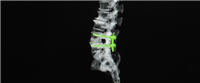
This condition is also known as swayback, and it sometimes affects the lower back and causes it to curve inwards severely.
This condition may affect a person of any age.
2. Scoliosis
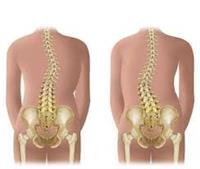
Scoliosis is defined as the tendency of the back to one side, and sometimes it affects the lower region of it, which leads to a bow in the lower back.
This type of curvature affects a person of any age, but it often begins to appear between the ages of 10-15 years.
Low back arch symptoms
Symptoms of lower back curvature vary depending on its type. Here is an overview of specific symptoms:
1. Symptoms of lordosis
Lordosis symptoms include
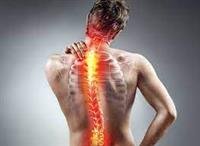
the pain.
Twitching.
Numbness.
Weakness.
difficulty moving
incontinence.
2. Symptoms of scoliosis
Symptoms of scoliosis include
Back pain, especially in adults.
Clearly visible arching in the back.
Bending to one side.
Unequal height between the shoulders.
Protrusion of one of the shoulders or thighs.
The protrusion of the rib cage bones from one side.
Causes of lower back arch
The causes of lower back curvature vary depending on the type of this curvature. Here are some reasons according to the type:
1. Causes of lordosis
Causes that may lead to a bowed lower back caused by lordosis include
Inherited structural abnormalities (Acon lasia).
Discitis.
Kyphosis.
Spondylolisthesis.
Obesity.
Osteoporosis.
2. Causes of scoliosis
About 80% of scoliosis cases do not have a known cause, and are then called idiopathic scoliosis - IS. Other cases are called according to the causes:
Congenital scoliosis: This is when a child is born in this condition as a result of the bones not forming properly while he is in the womb.
Neuromuscular scoliosis - NS: This is caused by a neurological disease, such as cerebral palsy (CP) or a muscle disease such as muscular dystrophy - MD.
Degenerative scoliosis - DS: This usually affects the elderly as a result of a lot of movement with age.
Diagnosis of low back curvature
Lumbar curvature is accurately diagnosed with the following methods and steps:
Know the medical and family history of the person.
Perform a clinical examination.
Taking diagnostic pictures of the back, including x-rays.
This aims to
Being able to determine the appropriate treatment.
Check for a bowed lower back.
Find out if there is a problem with the bones of the spine or not.
Determine the severity of the curvature, if any.
Low back curvature treatment
The curvature of the lower back is treated with the following methods, according to its type:
1. Lordosis treatment
Treatment methods for lordosis include
Pharmacotherapy to relieve pain.
Aerobic exercise and physical therapy.
Put a brace on the back.
Weight loss.
Surgical treatment.
2. Scoliosis treatment
Several methods are used to treat scoliosis, including the following
Condition monitoring
When the lower back curve is simple, the doctor may follow up on the patient’s condition every 4-6 months, then intervene with other treatment methods if the condition worsens in the future.
struts
This method is usually used for children and growing teens to avoid aggravation of the condition in the future.
surgeries
If the curvature is severe or rapidly worsening, the doctor may resort to surgical treatment.
splints
The splint is placed on the shoulder to cover the lower torso, and it is performed under general anesthesia.
They are usually replaced every few months to 3 years, and are used in most cases in children who the doctor thinks will get worse with growth.