
them
Do you want to know all the information about scars and how to treat them? Then you just have to read the article. Here are the most important details that you should know about scars in the following: How are scars formed? And why? Scars appear due to damage to the skin as a result of injury, disease, pollution, surgery, or penetration of the skin by an instrument. Scarring can be subtle and subtle
It is loose, or it may leave a prominent mark on the surface of the skin with a color different from the color of the skin near it.
Sometimes a prominent scar is accompanied by phenomena such as: pain, sensitivity, itching, and difficulty in movement in rare cases.
Types of scars
There are different types of pathological scars, the most important of which are
1. Hypertrophy
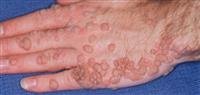
Hypertrophic scars are hard, raised, red scars that result from an overgrowth of connective tissue that leads to an excess of scar tissue.
There are certain areas of the body that are highly susceptible to this infection, including: the shoulder girdle, the back and the area behind the ear.
The appearance of hypertrophic scars can be linked to several factors, the most prominent of which are:
Close the wound with sutures.
Having a problem with the blood supply necessary to heal the wound, this problem is caused by a chronic disease, such as: diabetes, and various vascular problems.
Smoking constricts blood vessels.
It should be mentioned that the intensity and color of the red hypertrophic scar worsen during the six months to the first year of its formation, and later an improvement in the color, thickness and hardness of the scar appears.
2. Keloid scar
Keloid scars are scars that extend beyond the wound boundary, resulting from an overgrowth of connective tissue due to a genetic predisposition.
Keloid scars can occur on any part of the body, but the areas most susceptible to this scar formation are the pinna, the front of the chest, the shoulders and the back.
3. Pigmentation scars
Pigmented scars are scars that are darker in color than the surrounding skin, and they develop most often in dark-skinned people.
Pigmented scars usually result from an increased inflammatory reaction associated with an improper wound healing process, such as: pollution, or due to excessive sun exposure in the early stages of wound healing.
4. Shrinkage scars
Each scar has a tendency to shrink, but scars that have shrunk significantly may significantly limit joint motion.
Scar treatment
There are many ways to treat pathological scars, and the aim of the treatment is to improve and hide the scar, but it should be noted that correcting the scar may improve its condition, but it cannot completely hide the scar.
After a successful scar correction operation, a very light scar remains and blends well with the surrounding tissues, so that it can be barely noticed, but in some cases the improvement is not significant.
The most prominent methods of treating scars are as follows
1. Steroid injections
Steroid injections aim to suppress the excessive inflammatory reaction that leads to the formation of a thick scar, and are effective for hypertrophic scars and sometimes for keloid scars.
Steroid injections can be used two weeks after the surgical incision is closed. If the scar remains active, that is, if it is dark red, thick, and raised, injections can be continued every few weeks for a year or two.
Steroid s have very few side effects which include thinning of the skin, formation of tiny blood vessels on the surface of the skin and changes in skin pigmentation.
2. Compression bandages
Compression bandages are bandages whose principle of action is based on the activation of mechanical pressure that reduces the thickness of the scar, and it can be used at any stage when the scar is still active, i.e. shortly after wound closure and in the first one to two years.
Treatment includes pressure earrings and various pressure pads for all parts of the body.
3. Silicon
Available in the form of thin pads or as a topical ointment, silicone has advantages in reducing the prominence and thickness of the scar, and its use is effective in all active stages of the scar.
4. Surgery
Surgical treatment is an option for the relatively late stage, as most scars improve with time and respond to conventional treatments.
Surgical treatment is often used in cases of decreased range of motion.
5. Combined therapy
Sometimes different treatments are combined to get the best results, for example excision of a smallpox scar and injections of steroids around the time of surgery to prevent it from coming back.
6. Laser
The laser is intended for dark red scars and aims to lighten their color by shining laser beams on them to a specific degree.
7. Complementary therapy
Massaging the scar to soften it, lubricating it to reduce itching, and natural therapies to lengthen the scar and its range of motion are all complementary therapies that contribute to scar healing.
8. Other treatments
There is a range of other treatments intended for the advanced stage of keloid scars, including: radiation, local injections of chemicals, and freezing with liquid nitrogen.