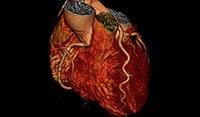
This device enables the coronary arteries and the heart to be examined by tomography with high spatial and temporal accuracy. The necessary ultra-high rotation speed, high-definition detector configuration, as well as electrocardiogram coordinates are found only in special tomography machines. The dual source CT scanner we use has two detectors and two tubes modified at 94 degrees with high resolution and enables the production of individual images without artifacts in less than a frame of a second even at a high heart rate, and thus the device works with an extremely efficient dosing, the entire heart can be covered in 300 parts per thousand of a second and at a dose of much less than 1 mSv. Compared to a conventional cardioscope and CT scan, this results in a dose reduction of more than 85% with a shutter speed of 75 milliseconds. This technology is currently in limited centers worldwide. All different issues can be clarified by accurate and rapid CT of the heart, and this includes, among other things, the morphological evaluation of the heart muscle, cardiac cavities and heart valves. However, the first place is occupied by the accurate qualitative and quantitative evaluation of the coronary arteries, so it is possible to detect narrowing or abnormalities of the coronary arteries early and with high accuracy.
It is useful to perform a CT scan of the heart, for example, in the case of atypical angina, in patients who suffer from an unclear sense of malaise, chest pain, or shortness of breath on exertion. In contrast to electrocardiograms or EKGs under stress, CT scans show changes in atherosclerosis, especially coronary stenosis, at an early stage before they become hemodynamically significant (>75% stenosis). Thus, the examination is appropriate in the context of early detection of coronary heart disease. It is in principle possible to perform a follow-up CT scan of the heart after stenting by balloon angioplasty or other methods or arterial bypass surgery. However, the range of indications must be limited here, and this is directly related to the patient''s pain symptoms and the number, size, nature, and location of stents or bypasses.