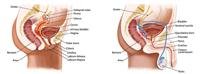
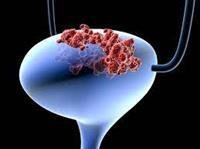
Bladder cancer is the fourth tumor in terms of prevalence, in approximately 80% of patients, a superficial tumor that does not penetrate the muscles of the bladder is detected, while in 20% bladder cancer is discovered in advanced stages. Despite treatment for bladder cancer, superficial tumors tend to come back after many years, during which there is no evidence of cancer
Bladder cancer, the progression from superficial disease to advanced disease depends on the stage of the disease and the degree of differentiation.
Types of bladder cancer
The source of most bladder tumors in developed countries is from the epithelial, that is, transitional cell carcinoma, and what remains is from the type of squamous epithelial cells, and its percentage is greater in cases related to chronic itching in the bladder or due to a parasite Schistosoma, and in rare cases the tumor is an adenocarcinoma.
Stages of bladder cancer
The stage of bladder cancer is determined by the degree of penetration of the tumor into the bladder wall, as follows:
Papillary tumor confined to the epithelium and does not penetrate the lamina propria.
Carcinoma in situ is a flat tumor that infiltrates through the mucous membrane and is located beneath the healthy mucosa layer, and therefore often cannot be detected and completely removed.
A tumor that penetrates the lamina propria but not the bladder muscle.
A tumor that penetrates the inner half of the detrusor muscle.
A tumor that penetrates the outer half of the detrusor muscle.
A tumor that penetrates the fatty layer around the blood vessels.
A tumor that penetrates the pelvic organs or the pelvic wall.
There is also a microscopic classification of degrees of differentiation, starting from 1, that is, low grade, to 3, that is, high grade. The combination of these two grades enables the prediction of the clinical course of the disease.
Bladder cancer symptoms
The most common clinical symptoms of bladder cancer are the following
Seeing bloody bleeding from the urinary tract.
Hidden bleeding that is detected only through laboratory testing of urine.
Pain in the waist due to obstruction of the ureter due to swelling of the bladder.
Frequency, urgency, and pain of urination due to swelling of the filter of the bladder wall.
A tumor surrounding the neck of the bladder and ureters.
Causes and risk factors for bladder cancer
Bladder cancer risk factors include
sex.
the age.
smoking.
Exposure to carcinogens.
Exposure to antitumor drugs.
Arsenic exposure.
Chronic infection due to bladder stones or due to the schistosomiasis parasite.
Complications of bladder cancer
Complications include
Anemia.
ureteral swelling
urethral stricture
incontinence.
Erectile dysfunction in men.
Impotence in women.
Bladder cancer diagnosis
Bladder cancer is diagnosed by CT scan, endoscopy, or ultrasound.
The necessary examinations are computerized tomography (Computational tomography) of the abdomen and pelvis, or imaging of the rib cage, or a bone scan, or blood tests for liver performance, or an alkaline phosphatase test.
Bladder cancer treatment
If the tumor has not penetrated the muscle and has been completely resected and the patient does not face risk factors for tumor recurrence, the patient is sent for follow-up, but if there are risk factors for tumor recurrence, the patient should be suggested complementary treatment with chemotherapy or bladder immunotherapy, in addition to the weekly protocols for 24 hours. 6-8 weeks to ensure that the tumor does not recur, as there are protocols for maintenance treatments that continue for several years after resection.
In recent years, other treatments have been added, such as gemcitabine, or synergos technologies that combine chemotherapy and heating.
In the event of a diagnosis of a disease that penetrates the bladder muscle, a radical cystectomy must be performed. In this surgery, the prostate and seminal vesicles are removed in men, while in women, the uterus, fallopian tubes, ovaries, and the anterior part of the vagina are removed.
While the prognosis for superficial metastatic cell carcinoma is good, in many cases the clinical course of invasive disease is associated with the development of metastases.
There is evidence that cisplatin-based chemotherapy, especially when given before surgery, may improve prognosis, and this combination chemotherapy is also the treatment of choice for patients diagnosed with metastases who are not considered for surgery.
Prevention of bladder cancer
The disease can be prevented by the following
Non-smoking.
Limit exposure to certain chemicals in the workplace.
Drink plenty of fluids.
Eat plenty of fruits and vegetables.