
ovulation? Here''s the answer
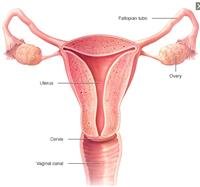
The fallopian tube is an organ of the female reproductive system that connects the ovaries and uterus, but what about blockage of the fallopian tube, and does blockage of the fallopian tube prevent ovulation? Let''s find out in what comes the answer to the question, does blockage of the fallopian tube prevent ovulation? In addition to the most prominent information about blockage of the fallopian tube: Does blockage of the fallopian tube prevent ovulation? Before answering a question, does blockage of the fallopian tube prevent ovulation? You must know what the term fallopian tubes mean, and fallopian tube blockage.
The fallopian tubes are muscular tubes lined with hair-like structures. The hairs run in both directions to help the egg travel from the ovary to the uterus.
The fallopian tube plays an important role in pregnancy Because it is the place where most of the eggs are fertilized, and blockage of the fallopian tube can occur if any part of the channel is damaged due to surgery or infection.
Now let''s get to know the answer to the question, does blockage of the fallopian tube prevent ovulation? The answer will be presented with points with sequential events to understand the answer simply:
The female reproductive system consists of the ovaries, uterus, and fallopian tubes, and if any medical problem occurs on any of these three organs, it will be difficult to get pregnant.
The ovaries connect to the uterus through the fallopian tubes, so the ovaries store eggs and release them randomly in the form of one egg every month, then the egg comes out of the uterus and travels through the fallopian tubes to the uterus.
Blockage of the fallopian tube usually prevents the passage of the egg to the sperm or the passage of the fertilized egg to the uterus. Therefore, blockage of the fallopian tube is a common cause of infertility, due to the prevention of sperm meeting with the egg in the tube for fertilization.
It has been concluded that blockage of the fallopian tubes on one or both sides is the main cause in 30% of infertile women.
It should be mentioned that partial blockage of the fallopian tubes can occur, which leads to an increased risk of what is known as an ectopic pregnancy.
Fallopian tube blockage symptoms
Fallopian tube blockage rarely causes symptoms, but some women may feel constant pelvic or abdominal pain at the time of each menstrual cycle, in addition to delayed pregnancy.
Some causes of blocked fallopian tubes are also associated with some of their own symptoms, such as:
General pelvic pain.
Pain during sexual intercourse.
Foul vaginal discharge.
Nausea and vomiting.
Severe pain in the lower abdomen.
High temperature.
Causes of fallopian tube blockage
Fallopian tube blockage may occur for several different reasons, the most prominent of which are the following:
Pelvic inflammatory.
Appendix rupture.
History of abdominal surgery.
Previous ectopic pregnancy.
Previous surgery of the fallopian tubes
Buildup of endometrial tissue in the fallopian tube
Having a sexually transmitted infection, such as chlamydia and gonorrhea.
Diagnosis and treatment of fallopian tube obstruction
After getting acquainted with the answer to the question: Does blockage of the fallopian tube prevent ovulation?
It may be difficult to identify a blocked fallopian tube, but there are 3 main tests for diagnosing blocked fallopian tubes, which are as follows:
X-ray test: where the doctor injects a dye into the uterus, and this dye must flow into the fallopian tubes, and if it does not flow into the channel, there is a blockage.
Laparoscopy: where the surgeon makes a small cut inside the abdomen and s a camera to take pictures of the fallopian tubes from the inside.
Ultrasound test: Known as hysterosalpingography, this technique uses ultrasound to visualize the fallopian tubes.
After diagnosing fallopian tube obstruction, the appropriate treatment is determined by the doctor, as fertility drugs help increase the chance of ovulation and pregnancy.
Either in the event of blockage of the two channels, the patient needs to undergo surgery or perform what is called in vitro fertilization.