
How is laser liposuction performed? And what are its benefits? Is it a safe procedure or do the risks outweigh the potential benefits? The most important information and details are in the following article. All you need to know about laser liposuction is what follows: What is laser liposuction? It is a type of aspiration
The fat that may be used to break up the fat locally in the places where it is accumulated in the body using laser beams, but despite the use of the word suction in the name of this purification, it does not include a strong suction as is the case in the traditional liposuction process.
Laser liposuction is performed through the following
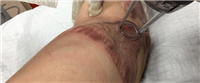
A special laser tool is ed through a small incision in the skin into the fat accumulation area after the patient is subjected to local anesthesia.
This laser is activated to begin to break down the fat and turn it into a liquid, then another small tube is ed to suction the liquid and get rid of this fat.
This type of liposuction is used to suction relatively small amounts of fat to highlight certain areas of the body more clearly.
There are several different types of laser liposuction procedures, and the difference is usually due to the type of instrument that is ed through the skin into the areas of fat accumulation.
Pros of laser liposuction
This type of liposuction technique may have some advantages and benefits compared to traditional liposuction procedures, and here is a list of the most important of them:
Relatively quick recovery time, as the patient is often able to return to normal life activities within a few days
Decreased chances of developing some postoperative complications, such as: fluid retention or pain.
Less chance of tissue damage, damage, or bruising in the liposuction area.
The appearance of the skin in the area from which liposuction was significantly tightened.
Results of laser liposuction and recovery
The results of the operation begin to appear almost immediately, and then these results become more visible after the suction area recovers from any swelling that may have been caused by the operation, but in most cases it may take a few months before the final results of laser liposuction appear completely and finally.
The recovery period from laser liposuction is relatively short, usually estimated at a week. However, in general, the surgeon advises the patient to avoid certain activities that may impose any kind of pressure or tension on the surgical wound until the wound is completely healed, which may take 6 months.
Categories that are not suitable for laser liposuction?
Laser liposuction is not suitable for everyone, so the following groups should avoid this procedure completely:
Pregnant or breastfeeding women.
Women who are on their period, especially those who have heavy periods.
People with certain diseases, such as: cancer, heart disease, liver disease, multiple sclerosis, or diabetes.
People who have had a pacemaker implanted.
People who are more likely than others to have abnormal growth of some types of tissues in their bodies, such as: scar tissue.
People whose bodies contain blood clots.
Patients taking medications that may make their bodies sensitive to light sources.
People who have recently undergone surgery.
Cons and side effects of laser liposuction
This type of liposuction technique may have some drawbacks, such as
Laser liposuction is not feasible for suctioning large amounts of fat, but some doctors may consider it a complementary process to complete the sculpting of certain areas of the body after suctioning large amounts of fat from them.
This type of liposuction technique may cause some complications, such as: thermal burns, bruising, pooling of blood under the skin, anaphylactic shock, scars, skin irritation, infections, or blood clots.
Other types of laser fat removal procedures
It is possible to use the laser medically in several ways to help get rid of excess fat in the body, some of which include making an incision in the skin, dissolving and liposuction, and others depend on dissolving the fat without making any incision in the skin and without any suction.
There are some types of other laser operations and technologies approved by the US Food and Drug Authority, in which excess body fat is eliminated by shining low-intensity laser beams on the surface of the skin in areas of fat accumulation without making any incisions in the skin.
These rays work to break down the fats inside the fat cells, so that the body can later get rid of these fats through excretion.