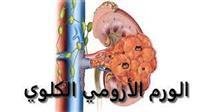
Nephroblastoma, Wilms'' tumor, is the most common type of malignant kidney tumor in children. It accounts for 6% of all malignant tumors that affect children in general. Symptoms of renal blastoma This tumor is diagnosed at about three years old when parents notice the presence of a tumor mass in the abdomen during a child''s bathing or dressing.
Other distinguishing signs of the disease include
abdominal pain
Urinate with spotting.
Unexplained high temperature.
Hypertension.
Excessive fatigue.
The disappearance of the pupil of the eye.
Urinary tract defects.
Mental retardation.
Causes and risk factors for nephroblastoma
It is not known why the disease occurs, but heredity may have a slight role in increasing the chance of its occurrence.
risk factors
Among the most important factors that increase the risk of developing the disease
African American ethnicity.
Family medical history.
Complications of nephroblastoma
Among the most prominent complications of the disease
hair loss
Anorexia.
Pain poverty.
diarrhea.
Nausea and vomiting.
Weight loss
Diagnosis of nephroblastoma
The presence of a tumor in the abdomen is confirmed by the following tests after a physical examination:
1. Examination of urine and blood
A blood or urine test is done to check the patient''s kidney function.
2. Imaging examinations
and the most important
Computed tomography (CT).
Ultrasound imaging of the abdominal region.
After the examination, an operation is performed to remove the tumor and the abdomen is examined again, in order to determine the extent of the disease and the severity of the tumor, and accordingly the treatment is chosen.
Treatment of nephroblastoma
Over the past 50 years, there has been a significant increase in the cure rates for Wilms'' tumor, which has turned from a fatal disease into a disease that is completely cured by about 90% of those infected with it.
This progress in treatment stems from the improvement of the methods of surgery and radiotherapy, but mainly as a result of the combination of these treatments with chemotherapy that is injected through a vein, which prevents complications, or the transmission of the disease to the lungs and bones.
During the last thirty years, patients with Wilms tumor have been treated according to protocols agreed upon by major research groups, such as: The National Wilms Tumor Study (NWTS) in the United States, and the International Society of Pediatric Oncology - SIOP. ) in Europe.
1. Principles of therapeutic protocols
The most important principles that underlie all protocols are
The spread of the disease and the extent of its severity increases the need for more intensive and powerful treatment, that is, a treatment consisting of a greater number of drugs in larger doses and for a longer period.
Evaluation of working treatment protocols based on results every few years improves treatment.
Orientation to minimal treatment in cases that appear simple, and a broader and more comprehensive treatment in cases whose results are found to be unsatisfactory from initial examinations.
During the last decade there has been a revolution in understanding the genetic and molecular biology of Wilms'' tumor.
Today, there is a lot of information about a number of genes, especially chromosomes 11 and 17, which are associated with the emergence of the disease, and this understanding may lead to enhancing the possibilities of full recovery from the disease.
2. The most important treatments used
The treatment is done in one of the following ways
Complete resection of the kidney.
Excision of the affected part of the kidney.
Chemotherapy.
Radiation therapy.
Prevention of nephroblastoma
There are no known ways to prevent the disease.