
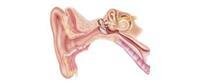
Otitis media surgery aims to treat complications caused by chronic middle ear infections, including: perforation of the tympanic membrane and separation of the auditory bones. Types of surgeries for middle ear infection Middle ear infection is treated using one of the following operations: Tympanoplasty: Tympanoplasty is used to treat the perforation of the eardrum, a simple surgery that takes less than an hour.
Ossiculoplasty: In this surgery, the connection between the auditory bones and the tympanic membrane is improved, which leads to better pick-up and transmission of sound to the inner ear.
Mastoidectomy surgery: This surgery aims to clean the middle ear cavity and the mastoid bone cavity from cholesteatoma, thus preventing damage to the ear that may be caused by the cholesterol layer and infections.
Preparations for the surgical treatment of otitis media
The doctor makes sure that there is no microbial infection in the patient''s ear, and also conducts comprehensive examinations of the hearing level, and the patient must inform the doctor of all the medications he is taking to ensure that they are safe to use before the operation.
Steps of the surgery
The steps differ according to the type of operation
Steps for tympanoplasty
This process can be performed by following the following steps
This operation is performed in adults under local anesthesia, and under general anesthesia in children.
The surgeon lifts the tympanic membrane and patches the hole. The membrane is taken from muscle tissue from above the ear pinna, or from the cartilage surrounding the ear canal.
The middle ear is entered without visible wounds, or through a small incision at the tip of the auditory canal.
2. Osteoplasty steps
Prosthesis may be taken from the affected person''s body, from a bone bank, or from a synthetic material and the membrane grafted with it.
The different types of this type of surgery are classified according to the degree of complexity of the surgery and the type of graft being implanted.
3. Steps of mastoidectomy surgery
The patient is completely anesthetized when performing the surgery, then the skin is usually cut behind the ear pinna and the mastoid bone cells are opened by an electric drill. The size of the wound is commensurate with the extent of the disease. The wound may be small or large.
recovery phase
During the first period of performing one of the previous surgeries, you must avoid the following:
Avoid sneezing violently
Avoid getting water into the ear, and consult a doctor about the possibility of taking a shower.
Avoid lifting weights.
Not driving or swimming.
Avoid air travel.
You may need a few weeks before making sure that the operation has been completed successfully, and you need 4 weeks to feel the full result of the operation.