

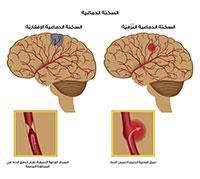
A stroke occurs when the blood flow to one part of the brain is interrupted, or the brain tissue is deprived of much-needed oxygen and other vital nutrients, and as a result, brain cells die within a few minutes. Stroke is a medical emergency, and immediate treatment is crucial to minimizing damage to the brain and preventing possible complications after a stroke.
Types of stroke
There are two main types of stroke, get to know them
1. Ischemic stroke
This type constitutes about 80% of strokes, and this stroke occurs when the arteries of the brain are narrowed or blocked, which causes a significant decrease in the amount of blood supplied to the brain, and this prevents the supply of oxygen and various nutrients to the brain, which leads to the death of brain cells within a few minutes.
The most common types of ischemic stroke are
Thrombotic stroke
This type of stroke occurs when a thrombus forms in one of the arteries responsible for supplying blood to the brain, and blood clotting usually occurs in areas that have been damaged by atherosclerosis, a disease in which arteries are clogged due to the accumulation of fatty deposits, this process It occurs in one of the two head arteries located in the back of the neck and responsible for supplying blood to the brain, like other arteries in the neck and brain area.
embolic stroke
This type of stroke occurs when a thrombus or other particle forms inside a blood vessel far from the brain in the heart region, and the blood stream sweeps it away with it until it settles in a narrow blood vessel in the brain region. This type of thrombus is called an embolus. This condition arises As a result of heart rhythm disturbances in one of the two upper chambers of the heart, such as atrial fibrillation, which leads to an imbalance in the blood supply and the formation of thrombi.
2. Hemorrhagic stroke
This stroke occurs when one of the blood vessels in the brain begins to bleed or rupture. This bleeding may occur as a result of some medical conditions that affect the blood vessels, such as: untreated high blood pressure and aneurysms. Another less common cause of bleeding is vessel rupture. Arteriovenous malformation (AMV - Arteriovenous malformation) is characterized by the fact that some blood vessels have thin walls, which leads to their rupture easily.
There are two types of hemorrhagic stroke
Intracerebral hemorrhage
In this type of stroke, one of the blood vessels inside the brain bursts, and blood flows to the brain tissues around it, causing damage to brain cells. Also, the brain cells behind the leak do not get a regular supply of blood, and they are damaged.
High blood pressure may over time cause a stroke of this type, and high blood pressure can make the small blood vessels inside the brain more fragile and more prone to cracking and rupture.
Subarachnoid hemorrhage
In this type of stroke, bleeding begins in one of the large arteries or in the surface area of the brain, and blood flows into the space between the brain and the skull, and it is accompanied by a very strong and sudden headache.
This type of stroke often results from the rupture or dissection of one or more aneurysms that may form and grow over time, or may be congenital.
After the bleeding begins, the blood vessels in the brain may widen and narrow in an irregular way, which can cause damage to cells by further decreasing the supply of blood to other parts of the brain.
Stroke symptoms
Pay attention to the following early symptoms
Difficulties walking
If a person has a stroke, they may stumble, feel dizzy, lose their balance, or lose coordination between senses such as movement and speech.
speaking difficulties
If a person has had a stroke, their speech may become slurred, or they may lose the ability to find the right words to describe what is happening to them and with them.
Try repeating a simple sentence. If you can''t do that, you''re probably having a stroke.
Paralysis or numbness on one side of the body
If a person has a stroke, they may lose feeling, or feel half paralyzed on one side of the body.
Try to raise both of your arms above your head at the same time, if one of them starts to , it is likely that you are having a stroke.
Vision difficulties
If a person has a stroke, he may suffer from sudden blurred vision, he may lose vision for a few moments, and he may suffer from double vision.
Headache
A headache that appears suddenly and without warning, or an unusual headache, which may be accompanied by a stiff neck, facial pain, pain between the eyes, sudden vomiting, or changes in cognitive status, sometimes may be a sign of a stroke .
transient ischemic attack (TIA - Transient ischemic attack)
A transient ischemic attack is a temporary defect in the delivery of blood to one part of the brain.
The symptoms of a transient ischemic attack are the same as those of a stroke, but they last for a shorter period of time, from a few minutes to 24 hours, and then fade away without leaving any lasting damage. A person may have more than one transient ischemic attack, which increases the risk of a massive stroke.
Causes and risk factors of stroke
There are many causes and factors that increase the risk of stroke, get to know them
Causes of stroke
Stroke occurs if there is a problem or imbalance in the amount of blood entering the brain, and the causes of stroke vary according to their type as follows:
Delivering a small amount of blood to the brain in an ischemic stroke.
Excess blood in the skull in a hemorrhagic stroke.
Factors that increase the risk of stroke
Risk factors for having a stroke include
Age: People over 55 years old.
High blood pressure: If the systolic pressure is 140 mm Hg or more, or the diastolic pressure is 90 mm Hg or more.
High cholesterol: If the level of cholesterol in the blood is 200 milligrams per deciliter or more.
Smoking: Smoking increases the risk of stroke.
Diabetes: High blood sugar may cause stroke.
Obesity: If the BMI value is 30 or more
Cardiovascular diseases: including heart failure, heart defect, inflammation of the heart, and arrhythmias.
Previous stroke or transient ischemic attack: This increases the risk of a massive stroke.
Elevated levels of homocysteine: a type of amino acid.
Use of birth control pills or other hormonal therapy: There was a relationship between hormone therapy and the risk of stroke.
Although the rates of stroke are the same for women and men, women are more likely than men to die of a stroke, and people of color are more likely to suffer a stroke than people of other ethnicities.
Stroke complications
Depending on the length of time during which the brain has suffered from a lack of blood supply, a stroke can cause a variety of disabilities that may be temporary, or may be permanent.
Possible complications as a result of a stroke vary depending on the part of the brain affected, and include the following:
Paralysis or loss of muscle movement.
Difficulties speaking or swallowing.
Memory loss or problems with general comprehension.
aches.
Sometimes people who have a stroke become withdrawn and less social, may lose the ability to take care of themselves, and may need nursing care to help them with daily tasks, such as: personal hygiene and others.
Stroke diagnosis
The following tests are the most common scans that can determine the risk of a stroke, but they can also serve as a diagnostic tool if a person has had a stroke:
Physical examination.
Ultrasound imaging of the carotid artery (Arteria carotis).
Arteriography.
Computed tomography (CT).
Magnetic resonance imaging (MRI).
Echocardiography.
Stroke treatment
Receiving immediate and urgent medical aid immediately after a stroke is vital and very crucial, and the type of treatment is related to the type of stroke, as follows:
1. Treatment of ischemic stroke
To treat an ischemic stroke, doctors must restore the blood supply to the brain as soon as possible.
Medications to promote blood clotting should be given within three hours of the first symptoms of a stroke. Prompt treatment not only increases chances of survival, but can help reduce complications that may result from a stroke.
Your doctor may recommend surgery to partially or completely open a blocked artery, including:
Open artery (CEA).
Install a flexible stent inside the stenosing.
2. Hemorrhagic stroke treatment
Surgery may be useful in treating a hemorrhagic stroke or in preventing another stroke.
A doctor may recommend any of these procedures if a person has a high and increased risk of developing aneurysms or ruptured blood vessels:
Aneurysm clipping.
Twisting, wrapping or tying the aneurysm.
Removal of malformed blood vessels.
Stroke prevention
It is advised to follow all prevention methods to prevent stroke.
1. Home remedies
To prevent stroke, it is recommended to follow a healthy lifestyle that includes
Treating high blood pressure.
Reducing the consumption of foods rich in cholesterol and fats.
Avoid smoking.
Diabetes treatment.
Maintain a healthy weight.
Exercising regularly.
Addressing psychological stress.
Avoid alcoholic beverages.
Avoid drugs.
Maintain a balanced and healthy diet.
2. Medication prevention
If a person has had an ischemic stroke, the doctor may encourage him to take medications to reduce the risk of a transient ischemic attack, such as: Aspirin.
If aspirin therapy does not prevent the risk of a TIA, or if the person is unable to take aspirin, the doctor may prescribe other blood-thinning medications.
Alternative therapies
There is no herbal treatment for stroke, but some herbs may reduce blood clotting and thrombosis, including:
turmeric.
ginger.
Red pepper.
Ginkgo biloba.
the Garlic.
cinnamon.


