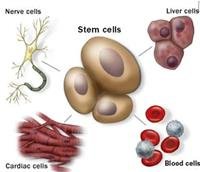
Surely you have heard about regenerative medicine based on the use of stem cells to treat various diseases, but what diseases are treated with stem cells? Stem cells are primary cells with the ability to transform into specialized cells. Multipotent stem cells are present in the fetus, cord blood and amniotic fluid.
And with a small number and fewer abilities in different tissues in an adult.
In the following, an explanation of the diseases that are treated with stem cells
Diseases treated with stem cells
Theoretically, there is no specific category of diseases that can be treated with stem cells. Stem cells can be induced to differentiate into any type of cell that can be used to repair damaged tissues through what is called Regenerative Medicine.
1. The role of stem cells in the treatment of neurological diseases
There are a number of neurological diseases that are treated with stem cells, as follows:
Parkinson''s disease
Isolating stem cells from the brain of a patient with Parkinson''s disease and re-injecting them into the brain after stimulating them to become dopamine-producing neurons may help reduce the muscle stiffness and tremor associated with the disease.
Alzheimer''s disease
Stem cells could help treat Alzheimer''s disease by taking them from the bone marrow of an affected person to be transplanted into the brain. To begin to carry out the functions of the affected cells.
brain attack
Early intravenous injection of neural stem cells provides the body with anti-inflammatory functions, increasing the protection of neurons by interrupting the splenic inflammatory process after internal cranial hemorrhage.
Other neurological diseases
In the following, some other neurological diseases are mentioned
Spinal cord injuries.
Amyotrophic lateral sclerosis.
2. The role of stem cells in the treatment of genetic diseases
Genetic diseases resulting from mutations are among the diseases that are treated with stem cells, and among these diseases we mention cystic fibrosis, sickle cell anemia, Huntington''s disease, Marfan syndrome, and breast cancer.
Stem cells are used in the treatment of genetic diseases through cellular repair of tissues affected by the disease, as stem cells that are not affected by mutations are cultivated To restore the normal function of the affected cells.
3. The role of stem cells in the treatment of other diseases
Among the diseases that are treated with stem cells, we mention
Type 1 diabetes.
heart disease.
Osteoarthritis.
burns.
cancer.
Stem cell uses
There are many uses through which stem cells are employed, and among these uses we mention:
Stimulating the heart muscle to repair itself: Studying how stem cells grow and differentiate from heart muscle cells may help in finding a way to stimulate the heart muscle to repair itself after a heart attack.
Using stem cells in studies: Stem cells can be used to study diseases, examine side effects of some drugs, and find new drugs.
Stem cell transplantation: Stem cell transplantation can be used to stimulate insulin production, when stem cells specialize into mature cells responsible for stimulating insulin production.