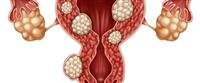
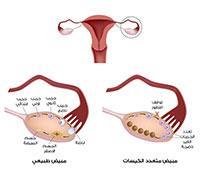
Cysts on the ovary A disease that affects the ovaries, which are two small organs in the female body located on both sides of the uterus. The ovaries produce hormones, including estrogen, which causes menstruation, and the ovaries release a very small egg every month. The egg heads to the fallopian tubes where it is likely to be fertilized there and this process of releasing the egg is called ovulation.
Tumors may form in the ovaries as they form in other organs in the body. Non-cancerous tumors are considered benign tumors, while cancerous tumors are called malignant tumors.
There are three types of tumors in the ovaries
Tumors of the epithelium, which is the outermost layer of the mucous membranes.
Germ cell tumors.
Connective tissue tumors.
Symptoms of cysts on the ovaries
Mostly, an ovarian cyst does not cause any symptoms. In many cases, an ovarian cyst is only discovered during a routine check-up with a gynecologist. But in cases where the ovarian cyst has curled up, bleeds, or ruptured, it may lead to problems.
When one of the following symptoms appears, it is important to be examined, because these same symptoms may indicate the presence of tumors in both or one of the ovaries. There are many cases in which cancer spreads to the ovaries before it is detected.
Symptoms of ovarian cysts include
Abdominal pain or bloating.
Difficulty urinating or urinating often and often.
Dull pain in the lower back.
Pain when having sex.
Pain during menstruation.
Severe bleeding.
high weight.
nausea or vomiting
Loss of appetite.
Feeling full after eating a small meal.
Causes and risk factors for cysts on the ovaries
Doctors don''t know for sure what causes ovarian cancer, but they have found a number of risk factors, including:
age, especially among postmenopausal women.
smoking.
Excess obesity.
Women who did not give birth or did not breastfeed.
Medicines to treat infertility and fertility problems such as: Clomid.
Hormonal treatments.
A family or personal history of cancer in the ovaries, breasts, or colon.
Complications of cysts on the ovaries
Complications include
Ovarian torsion: Cysts that enlarge can cause the ovaries to move, increasing the chance of painful ovarian torsion. Symptoms can include sudden onset of severe pelvic pain, nausea, and vomiting. Ovarian torsion can also decrease or stop blood flow to the ovaries.
Rupture: A cyst that ruptures can cause severe pain and internal bleeding. The larger the cyst, the greater the risk of rupture. Vigorous activity that affects the pelvis, such as vaginal intercourse, also increases the risk.
Diagnosis of cysts on the ovaries
A gynecologist or family doctor can feel a mass when performing a routine examination in the pelvic area. Most tumors in the uterus are benign tumors, but some of them may be cancerous, so it is very important to examine any cyst present in the uterus, and the examination is especially important for postmenopausal women. Since the risk of developing ovarian cancer is greater at this age.
Tests to detect a cyst or cancerous tumor in the ovaries include
Ultrasound examination.
Computed Tomography - CT.
Magnetic resonance imaging - MRI.
PET - Positron emission tomography.
A blood test to measure the level of hormones.
Laparoscopy examination.
In cases where the diagnosis of ovarian cancer is confirmed, the doctor uses the test results to determine whether the cancer has spread beyond the ovaries.
If the cancer has already spread outside the ovaries, the doctor relies on the results of the tests to determine the extent of the spread of the cancer. This diagnostic process is called staging the disease, as this identification helps doctors choose the appropriate treatments and treatment methods.
Treatment of cysts on the ovaries
Treatment of ovarian cysts The cyst in the uterus often disappears automatically and without the need for any treatment. For women who do not feel disturbing symptoms, especially if they are under menopause, the doctor generally recommends careful waiting without treating the cyst.
However, he perseveres in examining the patient once a month for a period of three months in order to ensure that there are no changes in the status of the cyst in the uterus. In cases of a uterine cyst that does not disappear automatically, it grows or causes pain, surgical treatment can be resorted to. There are two methods of surgical treatment, which are: Include:
Laparoscopic surgery.
Laparotomy.
In addition to surgical treatment, two other treatment methods can be adopted
Chemotherapy.
Radiotherapy.
One of the aforementioned treatment methods can be adopted surgery, chemotherapy and radiotherapy as the only method of treatment, or it is possible to combine several treatment methods together. There is a possibility of recurrence of cancerous tumors in the uterus. In this case, there is a need for additional surgery sometimes combined with chemotherapy or radiation.