Laser keratoplasty aims to correct vision in people who want to dispense with the use of glasses and may suffer from some visual problems, such as: farsightedness and astigmatism. This type of operation depends on causing a change in the cornea of the eye using laser beams, as the laser beam shrinks or changes the shape of the cornea
Cornea, which works to improve the ability of the cornea to focus the light entering the eye on the retina.
It is important to know that this type of operation has not been proven effective in the long term, and visual disturbances usually return within months or several years of the operation.
Risks of performing the operation
Laser eye surgery is associated with many risks, such as the following
pollution.
Bleeding
Scars at the operation site.
in blood pressure
dry eyes
photosensitivity
prior to the operation
Before performing laser keratoplasty, a consultative meeting is held with the patient. To ensure that the patient does not suffer from diseases that may prevent him from performing this operation, and the reasons for the surgery are also examined.
The ophthalmologist performs a comprehensive eye examination, including examination of the visual field, intraocular pressure, visual acuity, and examination of the fundus.
The doctor should be consulted about the medications that should be stopped before the operation, and the use of all types of contact lenses, in addition to cosmetics, should be stopped in the days before the operation.
during the procedure
Laser keratoplasty does not take more than a few minutes, and is performed as follows
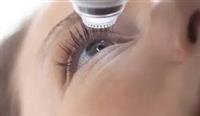
Instillation of a pupil dilator followed by a local anesthetic.
Directing thin laser beams towards the cornea that changes the angle of the cornea, so that the light rays entering the eye can more precisely reach the retinal tissue at the bottom of the eye.
Post-operation
Here are the most important things that must be taken into consideration after the operation:
The patient can go home on the same day of the operation, but it is recommended to get enough rest before that.
The patient can drive during daylight hours, but night driving should be avoided during the first weeks after surgery, due to severe sensitivity to light.
The doctor prescribes some antibiotics to prevent infection, and some painkillers can be taken to relieve pain when needed.
The patient should go to the doctor immediately if some symptoms appear, such as: severe pain, high temperature, secretions from the eyes, and severe bleeding.