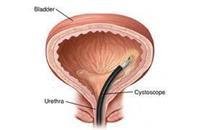
In cystoscopy, the urinary bladder is monitored by an optical tube containing a camera, which is ed through the urethra into the bladder. The purpose of the examination is to examine the structure of both the urethra and the bladder. When is this analysis performed? Cystoscopy is performed in the following cases: Exposure to certain symptoms, such as: seeing blood during urination, excessive urination, and pain during urination.
Diagnosis of some diseases, such as: bladder stones, bladder cancer, and cystitis.
Treating some diseases, sometimes when there is a very small tumor, a small tool inside the tube may be able to remove the tumor.
Diagnosis of an enlarged prostate by seeing a narrowing of the urethra.
category at risk
There is no specific group that needs a cystoscopy.
Examination-related illnesses
The following are the most important diseases that require cystoscopy and urethra
Cystitis.
Bladder stones
Bladder Cancer.
The method of conducting the examination
Among the most important things to know about the examination are the following
The doctor will ask the patient to take an antibiotic before performing a cystoscopy.
The patient is asked to empty the bladder before starting the endoscopy.
The person to be examined sits in a certain position, as he sits on a special chair and raises his legs to the top.
The doctor s the tube after numbing the urethra with a local anesthetic, and sometimes an anesthetic is injected through a vein.
The doctor fills the bladder with water in order to expand it, so that the wall can be seen clearly.
A sample of tissue may be taken for examination under a microscope, if the doctor sees any abnormal or suspicious sign.
The examination takes 15-20 minutes.
Warnings
Public
Among the risks of endoscopy are the following
Bleeding
Exposure to infection.
Pain in the examination area.
During pregnancy
In general, this examination is not performed, and it is preferable to postpone it until after childbirth.
Breast feeding
There are no special recommendations.
Children and infants
There are no special problems, but in order to perform the examination in children, the child often needs complete anesthesia.
Elderly
There are no special recommendations.
Driving
Do not drive until the anesthetic wears off.
Medications that affect the test result
The doctor must be informed if the following medicines are taken before the examination, as they cause bleeding:
Anticoagulant medications.
Aspirin.
Nonsteroidal anti-inflammatory drugs.
Analysis of the results
The results of this examination can be explained by the following
Sound results: The walls of the bladder are intact and smooth without changes in their structure and function.
Improper results: There are problems with the appearance of the bladder, which is reflected in its function.