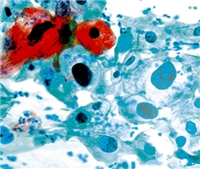
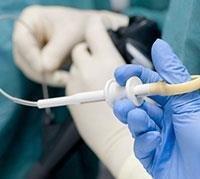
A biopsy is a type of invasive examination, during which a sample of a tissue or cell of the body is taken for accurate testing under a microscope. This type of examination is often resorted to when it is found in previous examinations that the tissues are not healthy. There are several types of biopsies, which is what they have in common
All of them are the use of a sharp tool in order to cut out a part of the tissue, and in some cases aspiration by the needle may be sufficient (Aspiration biopsy). The method of taking the sample is usually related to the tissue to be sampled, whether it is the skin, breast, liver, kidney, intestine, or others.
When is the examination performed?
A biopsy is performed in order to diagnose any abnormal event that occurs in a tissue of the body, for example, a biopsy is used to diagnose tumors, to detect cancer, and to diagnose various inflammatory, infection, or autoimmune diseases.
A biopsy is usually performed when an accurate diagnosis of an abnormality that was detected through a previous non-invasive examination is desired, such as finding a suspicious mole, a solid lump in the breast, or even a suspicious polyp in the intestine during a physical examination of the patient.
In addition, this examination is performed in order to follow up and monitor the efficacy of a treatment or to diagnose the recurrence of a disease, in many cases when it is not clear what is the extent of the disease, it is necessary to take biopsies during surgical procedures, in order to estimate the extent of the disease.
category at risk
Patients who suffer from diseases of the heart or lungs must inform the doctor of this before conducting the examination. In addition, he must be informed that he is taking blood-thinning medications and anticoagulants, as the patient may be asked to change the type of medication several days before the examination.
It should be noted that it is not recommended at all for patients with blood clotting and bleeding disorders to undergo a biopsy.
In order to perform this examination, it is necessary to obtain the consent of the patient, who must sign a declaration of consent. In the event that the patient is a minor, the consent of the parents is required.
Diseases that can be detected through biopsy
There is almost no tissue in the body that cannot be sampled, so a biopsy can be done for a wide range of conditions and diseases, including:
Benign and malignant tumors, such as: tumors in the brain, lungs, breast, liver, digestive system, skin, bladder, kidneys, and others.
Inflammatory conditions, such as inflammatory bowel diseases.
Infectious diseases.
Connective tissue diseases.
Autoimmune diseases.
The method of conducting the examination
The preparations depend on the type of tissue from which the sample is to be taken. For a small invasive sample, such as a skin sample, a local anesthetic must be injected into the biopsy site. For a more in-depth biopsy examination, it may often be necessary to administer general anesthetics in addition to for pain relievers.
during the examination
A simple biopsy often takes about 5-10 minutes. During the examination, the area being examined is anesthetized with a local anesthetic by injecting the anesthetic into the skin around the required area.
After that, the doctor s a needle with a special head, about 3-4 millimeters thick, into the area from which the sample is taken, and pulls a piece of tissue out.
After taking the sample, the examination area is bandaged. It is possible to take other samples during surgeries or during other invasive examinations, such as colonoscopy or gastroscopy.
after examination
It is not expected that any special problems will occur. If a bandage is placed, it must be kept for a period of 24 hours and it should not be exposed to getting wet. In some cases, minor bleeding may occur and then it must be stopped by an additional bandage. The existing bandage may not be removed for fear of contaminated agents entering the the wound.
The doctor must be informed of every change that occurs after the examination, such as: bleeding, dizziness, or pain in the examination site, or others.
Warnings
Driving
In most cases, sedatives and pain relievers are given, which reduces the feeling of discomfort after the procedure, and the patient may not be able to drive after receiving these medications.
Medications that affect the test result
The doctor who specializes in taking blood thinners, anticoagulants and other medications must be informed, as the patient may be asked to change the type of medication several days before the examination.
Analysis of the results
The results of the biopsy analysis appear after about a week or two in the form of a pathological report, and the doctors who examine the samples under the microscope are doctors specializing in pathology or pathology, as they test the general appearance of the tissue and cells in terms of the following:
number of them.
its shape.
its size.
There is often a description of the features of normal tissue versus a description of abnormal tissue diagnosed, eg if inflammatory or cancerous cells are diagnosed in the tissue based on the result the diagnosis is determined in order to proceed with treatment.