
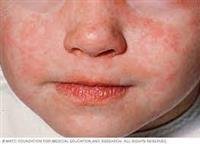
Measles is a viral infection that often occurs in childhood and is preventable with a vaccine. What are the symptoms of measles? Learn about it through this article. Measles is known in English as (Measles), and it is a viral infection that affects children, it can be dangerous, and it may be fatal for young children, but the death rate has decreased worldwide due to the availability of the vaccine.
Measles infection begins in the respiratory system, where the virus that causes the disease lives in the mucus of the nose and throat specifically. It is easily transmitted from an infected person to a healthy person through the air, as the virus remains active on surfaces or in the air for about two hours.
Measles is considered dangerous because it is highly contagious, and the infected person may infect others approximately four days before the first symptoms of the disease appear on him, and the infection period continues for up to four days after the rash is cleared.
Symptoms of measles in children
Symptoms of measles begin to appear after the virus enters the human body, the first of which is a high body temperature, which starts 10-12 days after exposure to the virus, and lasts for approximately 4-7 days.
During the fever period, the following symptoms may appear on the infected person.
Cough.
fever.
Runny nose.
red eyes
sore throat.
The appearance of white spots inside the mouth.
Skin rash, usually starting at the hairline and spreading to the neck, trunk, extremities, feet, and hands.
The rash is a common initial symptom of measles, it can last up to 7 days, and appears within 14 days of exposure to the virus.
stages of infection
Measles infection occurs in several stages, as follows
Infection and incubation: It occurs in the first 10 to 14 days after infection with the virus. But there are no signs or symptoms of measles during this time.
Non-specific signs and symptoms: Measles generally begins with a mild to moderate fever, and is accompanied by persistent cough, runny nose, sore eyes, and sore throat. These relatively mild symptoms may last for two or three days.
Acute disease and skin rash: The rash appears at this stage in the form of small red spots, some of which are large, as they appear on the face first. The rash spreads over the body and the temperature rises sharply, it may reach 40-41 degrees Celsius. The rash recedes and begins to fade from the face first.
Infectious period: A child infected with measles can transmit the virus to others for eight days, starting four days before the rash and ending when the rash has been present for four days.
Measles complications
Measles infection can be associated with some complications, the most important of which are:
Ear infection: Bacterial ear infection is one of the most common complications of measles.
Inflammation of the bronchial tubes and vocal cords.
Pneumonia: People with weaker immune systems are more likely to develop severe and serious pneumonia.
Encephalitis: It may occur immediately or several months after measles infection, but it is rare.
Pregnancy problems: If a pregnant woman becomes ill, she may be at risk of premature birth, low birth weight, or even fetal death.
Measles and German measles
It is important to differentiate between measles, which we have discussed in this article, and German measles, or what is known as (Rubella). highly contagious, such as measles.
Symptoms of German measles begin to appear two or three weeks after exposure to the virus, and may last for a day or five, and they include the following:
Relatively high temperature, about 38.9 degrees Celsius.
headache.
Congestion or runny nose.
Inflammation and redness in the eyes.
Swollen lymph glands in the neck or behind the ear.
A red rash that starts on the face and spreads to the body, then the arms and feet.
pain in the joints.