
You must have suffered from toothache and tooth decay that prompted you to go to the dentist to remove the decay and relieve the pain. In this article, we will talk about nerve filling. Some may think that the nerve filling process is painful and affects the health of the teeth, but in fact it is a simple and painless process, in what comes everything you should know about nerve filling: nerve filling
Overview
It is a treatment performed by a dental neurologist to repair and preserve the pulp of an inflamed or dead tooth, which is defined as a soft material located in the middle of the tooth that contains the nerve, connective tissue, and blood vessels.
Both the nerve and the pulp may become inflamed or irritated due to deep caries, repeated dental procedures, large fillings, cracks, and facial trauma.
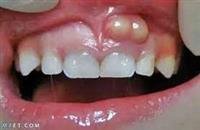
If the inflamed tooth is not treated, the surrounding tissues may become infected, and an abscess may form.
Some people may fear that removing the nerve may affect the function and health of the tooth, but in fact, removing it does not have that vital effect. Because the nerve''s primary function is a sensory function to sense hot and cold.
Nerve filling: causes
The nerve, pulp and nerve filling are removed if they are damaged Because this leads to their decomposition and then bacteria begin to spread in the pulp cavity.
In addition, leaving the tooth untreated may cause the following
Swelling in the tooth area that may spread to other areas of the face, neck, or head.
Bone loss around the root tip of the tooth.
The death of the pulp of the tooth or the complete loss of the tooth.
Nerve filling: the method
Nerve grafting is performed in three steps and is performed over one to three sessions depending on the condition of each individual.
In cases where the shape of the channel is curved, or it has several channels, or the size of the inflammation is large, you may need one or two additional sessions than the rest of the cases.
The nerve is filled as follows
Root canal cleaning
In this step, the dentist removes everything inside the root canal, as follows
First, the doctor will anesthetize the patient locally.
He makes a small incision on the surface of the tooth to access its internal contents.
It begins with the removal of infected and dead pulp tissue using delicate instruments.
Root canal filling
This step is done with the following procedures
The dentist begins by cleaning, shaping and disinfecting the hollow area using precise tools and a special solution.
He fills the tooth with a rubber-like material, and using an adhesive, he seals the canals completely and tightly.
After removing the root canal, the patient will lose his ability to feel any pain in this tooth, due to the removal of the nerve tissue from it and then the treatment of inflammation.
Adding a filling or crown to the tooth
At this stage, the tooth is more fragile than it was before the nerve filling, so resorting to adding a crown or tooth filling to protect it.
Until the filling or crown of the tooth is prepared, the patient must not chew or bite on the tooth.
After installing the crown, the patient can use the tooth as before.
Nerve filling: complications
Complications may occur in the following cases
The doctor may not find all the root canals of the tooth, he may find three canals for the tooth that has four roots, in this case the infection will spread from the infected root canal to the bone.
There is no proportion between the size of the filling and the size of the root canal. Bacteria may enter the tooth and the infection will recur again.
The root may crack during the operation, or the tools may break in the canal Which makes the tooth filling process more difficult.
In the event of any complications, the doctor will deal with them and complete the nerve filling process. To avoid complications, follow the doctor’s instructions. In the event that antibiotics are prescribed, you must adhere to taking the full tablets even if you feel better.