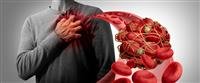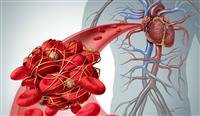

Hypercoagulability, or hypercoagulability, is a disorder that occurs when blood clots too quickly.
Important information about hypercoagulability
Important information about hypercoagulability includes the following
The natural clotting process occurs when a wound occurs in the blood vessels, as the body stops bleeding by forming a blood clot consisting of some proteins and platelets, which helps the wound heal as quickly as possible.
Hypercoagulation occurs as a result of certain acquired or inherited disorders, when blood clotting occurs at a rate greater than normal.
The process of blood clotting increases as a result of disturbances in the levels of some proteins responsible for regulating the clotting process.
Excessive blood clotting causes swelling in the legs and arms and increases the risk of blood clots.
Blood clotting conditions can sometimes be serious, especially when they are not fully diagnosed and treated.
Symptoms of hypercoagulability
Among the important notes about the symptoms of hypercoagulability are the following
Clots and blood clots begin to form as a result of some inherited disorders in adulthood.
Most patients usually develop deep venous thrombosis, which usually occurs in the legs, causing swelling in the legs.
The patient may be exposed to many deep clots in the legs, which leads to a change in the color of the skin and the appearance of severe swelling in it, and this condition is called chronic deep vein insufficiency.
Sometimes clots travel to other areas of the body, including the lungs, causing pulmonary embolism.
Clots may form in the superficial veins of the legs, causing inflammation and pain in the area.
Some clots form in the veins of the arms, abdomen, and brain, but less commonly.
Some people with antiphospholipid syndrome may suffer from venous or arterial thromboembolism, which can sometimes be dangerous and interrupt the blood supply to the heart and brain.
Causes and risk factors for hypercoagulability
The causes and risk factors for hypercoagulability can be divided as follows
1. Causes of inherited hypercoagulability
In this type of hypercoagulable disorder, the child is born with a tendency to form blood clots, and the disorder takes several forms as follows:
Deficiency of normal proteins that prevent blood clotting, such as antithrombin, protein C, and protein S.
High levels of fibrinogen or a mutation in it.
Elevated levels of factor VIII, factor IX, and XI.
Abnormal fibrinolysis as a result of hypoplasminogenemia or hematopoietic dysplasia, or elevated levels of plasminogen activator inhibitor.
Decrease in the activity of the active protein C due to the presence of Factor V Leiden protein.
A mutation of the prothrombin protein.
High levels of homocysteine, due to a mutation in the enzyme methylenetetrahydrofolate reductase (MTHFR).
Dysfibrinogenemia, abnormal serum fibrinogen activity.
Deficiency of the plasminogen protein that converts to plasmin with the help of some enzymes, and its function includes dissolving clots.
2. Causes of acquired hypercoagulability
This type of disorder occurs as a result of a surgery, exposure to a trauma, taking a type of medication, or exposure to some conditions that increase blood clotting. Some of the conditions that cause acquired hypercoagulability include the following:
getting cancer.
Take some cancer medications, such as tamoxifen, bevacizumab, thalidomide, and lenalidomide.
Recent trauma or surgery.
Obesity.
pregnancies.
Use of additional estrogens, including birth control pills.
Hormone replacement therapy.
Prolonged bed rest or immobility.
Heart attacks, congestive heart failure, and stroke.
Low platelet count in the blood due to heparin or low molecular weight heparin preparations.
Long-term air travel, also known as economy class syndrome.
Antiphospholipid antibody syndrome.
Previous history of deep vein thrombosis or pulmonary embolism.
Myeloproliferative disorders such as polycythemia or thrombocytosis.
Paroxysmal nocturnal hemoglobinuria.
Inflammatory bowel syndrome.
Immunity deficiency Virus.
Nephrotic syndrome, which involves having too much protein in the urine.
Connective tissue diseases, such as systemic lupus erythematosus.
Hyperlipidemia.
getting old.
Nephrotic syndrome.
Vasculitis.
Buerger''s disease.
Complications of hypercoagulability
Among the important notes regarding the complications that can be caused by excessive blood clotting are the following:
People with hypercoagulable conditions have an increased risk of developing blood clots in various blood vessels.
Blood clots in veins or the venous system can travel through the bloodstream and cause deep vein thrombosis, such as those in the veins of the pelvis, leg, arm, liver, intestine, or kidney. The clot can also travel to the lung, causing a pulmonary embolism.
Blood clots in the arteries can increase the risk of stroke or heart attack.
Leg pain increases, and difficulty walking may occur, or even loss of a limb.
Diagnosis of hypercoagulability
Hypercoagulability is diagnosed by the following
1. Know the patient''s medical history
Among the important notes regarding the patient''s medical history are the following
Certain medical conditions increase the risk of developing hypercoagulability. Therefore, it is necessary to know the patient''s medical and family history.
A person is more likely to have hypercoagulability if they have any of the following
Family history of hypercoagulability.
Abnormal blood clotting at an early age of less than 50 years.
Blood clots in unusual sites, such as veins in the arms, liver, intestines, kidneys, or brain.
Blood clots that occur for no apparent reason.
Frequent blood clots.
A history of recurrent miscarriages.
Stroke at an early age.
2. Laboratory tests
Laboratory tests are sometimes performed, usually in a specialized coagulation laboratory to be interpreted by some medical specialist.
The tests that are performed include the following
Prothrombin time test: This test is used to monitor the patient''s condition and to know how fast his blood is clotting.
Activated partial thromboplastin time: This test is used to see how fast your blood clots while taking heparin.
Other tests: These include a fibrinogen test and a complete blood count.
Treatment of hypercoagulability
Most of the time, hypercoagulability can be treated by taking anticoagulant medications. Important notes regarding treatment include the following:
Anticoagulant medications are needed in cases where the patient has some blood clots, as these medications help prevent additional clots from forming.
Medications that can be taken include
Warfarin: Warfarin is a low-dose tablet that is taken orally.
Heparin: Heparin is taken intravenously or under the skin, and is usually taken once or twice a day.
The doctor discusses the benefits and risks of medications with the patient, and a good diagnosis of the patient''s condition helps determine the appropriate treatment.
If warfarin is prescribed to the patient, some important notes should be known, such as the following:
Some tests are performed periodically to determine the effectiveness of the treatment.
You should tell your doctor about all the medications and nutritional supplements you take, as they can affect warfarin levels in your blood.
Warfarin should be avoided if a woman is pregnant, and a doctor should be consulted to change the medication to an appropriate type.
Prevention of hypercoagulability
There are no clear ways by which hypercoagulability can be prevented, because it is usually due to genetic and inherited causes, but conditions that can cause hypercoagulability must be treated quickly before the condition worsens.