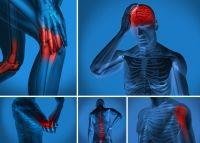
Pain is an unpleasant experience, which may be a sensory or emotional experience caused by damage to various tissues of the body.
We all consider pain as a sign of a disease, which is what usually drives us to go to the doctor, meaning that pain is the most common motive to go to the doctor for treatment.
Pain has an important function, which is protecting the body and maintaining the balance of the various body systems, as pain distinguishes and locates processes that cause damage to body tissues, with the aim of stopping the sensation of pain, and stopping processes that cause pain and damage to the body.
Acute pain causes reactions in the body such as behavioral alertness, and a reaction indicating the presence of distress or stress, which include a rise in blood pressure, an increase in heart rate, dilation of the pupils of the eyes, and the secretion of the hormone cortisone in large quantities, and the sensation of acute pain is usually accompanied by a contraction in the limb who is in pain.
How does the feeling of pain arise?
The ends of the nerves in the skin transmit various information to the central nervous system when a chemical stimulus, a thermal rise, or a mechanical stimulus occurs.
When the external stimulus is strong, these nerve endings transmit the feeling of pain to the brain according to the following pathway: a stimulus, then the nerve end, then the spinal cord, then the brain.
The deep body tissues and internal organs are affected by nerve endings that respond to mechanical stimuli, unlike the skin, which is affected by nerve endings that respond to various stimuli. The automatic stimulus in the internal organs and deep body tissues is activated sharply when there is inflammation.
The autostimulator triggers different mediators that activate a signal transmission chain, which makes the nerves more sensitive to receiving the autostimulus.
Types of pain
There are two main types of pain
1. Acute pain
This type of pain is generally severe and of short duration, and the pain here is the way the body alerts the person to exposure to injury, or to local tissue damage.
Treatment of the underlying injury usually resolves acute pain.
2. Chronic pain
This type of pain lasts much longer than acute pain, and it often has no cure.
Chronic pain can be mild or severe, and it can also be continuous, as in the case of arthritis, or intermittent, as in the case of migraines.
pain symptoms
There are some symptoms that are associated with the pain, as follows
Depression.
Flu-like symptoms, such as: fever, chills, fatigue, headache, and sore throat.
Difficulty concentrating.
Anorexia.
Muscle spasm.
Numbness.
sleep disturbances
Unexpected weight loss.
Causes and risk factors for pain
In some cases, it is obvious that the cause of the pain is an injury or a certain medical condition. In other cases, the cause of the pain may be less obvious or unknown.
Among the main causes of pain
Headache.
Toothache.
Sore throat.
abdominal cramps
Muscle spasm.
burns.
bone fractures
Pain complications
Chronic and recurring pain may cause the following complications
physical suffering.
Family problems.
Depression.
Suicidal ideation.
Insomnia.
Pain diagnosis
The patient determines the degree of pain himself, which makes the process of assessing the intensity of pain completely subjective.
Other methods are available to determine the degree of pain, and these methods are based on patient observation, but these methods are rarely used.
Pain self-assessment is based on the patient observing the pain he feels over a period of time, and comparing its intensity with previous time periods. A scale is used for this purpose to determine the degree of pain, and the scale consists of ten degrees 1-10, where the lowest degree No. To the extent that the patient does not feel his presence, while the maximum score of 10 indicates very severe pain, which cannot be tolerated.
The doctor may order some tests to diagnose the cause of the pain, most notably
Blood, urine, and stool tests: to make sure you don''t catch a pain-causing infection.
Endoscopic examinations: to detect signs of problems in the respiratory system, urinary system, or reproductive system.
Imaging tests: such as: computed tomography, magnetic resonance imaging.
Biopsy: A sample is taken from the affected organ.
Nerve function tests: These help check if the nerves are working or not
Psychological examinations: to ensure that the patient has depression.
Pain management
Treatment varies according to the type of pain and its severity, as follows
1. Treatment of acute pain
The best available treatments are those that remove the pain-causing factor and stop the damage it causes to tissues, but it is worth mentioning here that often the pain does not go away immediately when the causative factor or stimulus is removed.
In some cases that cause severe pain, such as burns, cancer, and various wounds, the following pain relief methods are used:
conventional analgesics
Such as: Aspirin, acetaminophen, and a group of non-steroidal anti-inflammatory drugs (NSAIDs), as these drugs slow down the enzyme associated with the signal transmission chain that causes pain, and thus the pain is relieved or stopped.
These medicines are approved for the treatment of headaches and pains that come from muscle or bone mass.
The side effects of these drugs are heartburn and causing an imbalance in the work of the kidneys.
Opioid medications
This family of medicines is considered the strongest pain reliever. As for the side effects that may arise when using these medicines, their symptoms are very dangerous and may lead to weakening of the respiratory system. However, the use of these medicines is considered safe, as with their high ability to relieve pain, any of the damages can be stopped. The side effects that may arise from the use of Naloxone, which neutralizes the effect of the analgesic drug.
The mechanism of action of these opioid drugs differs from previous analgesics, as they do not slow down the action of enzymes that transmit pain signals to the nervous system, but are based on activating nerve cells, and slowing down or reducing the process of transmitting pain to the nervous system.
Other side effects may appear when using medicines belonging to this group, such as: nausea, constipation, and a feeling of numbness.
Antidepressant drugs
It has been found that the pharmacological drugs approved for the treatment of depression are also effective in stopping the pain that comes from the nerves, but it is known that the use of these types of drugs has side effects summarized by an increase in appetite for food, and various other effects on the central nervous system.
Patient - controlled analgesia - PCA
A device by which opium is injected into the patient''s body in a way that gives him control over the analgesic. This method is usually used after surgical operations and in the treatment of cancer cases.
2. Treatment of chronic pain conditions
Treating chronic pain conditions is complex and challenging.
In many of these cases, there is difficulty in diagnosing the source of the pain, and then the process of careful research is initiated to identify the source of the pain without reaching the cause, and this condition causes the patient a lot of suffering after the continuous feeling of pain for a long time.
There are also cases in which the pain stems from chronic diseases that have no final cure, for example: cancer, migraine, tissue and muscle pain known as fibromyalgia, physical therapy, diabetes, and other diseases.
When treating patients with chronic pain, it is necessary to distinguish and diagnose whether the chronic pain causes the patient to have an emotional imbalance, such as the appearance of depression, loss of appetite, change in sleep style, and other similar phenomena.
In order to treat chronic pain conditions, it is also necessary to focus on improving the patient’s quality of life. Some goals must be planned, such as:
Improve sleep quality.
Go out for a walk.
Try to get back to work.
Restore the ability to focus.
Treatment in this case consists of several treatment methods, including drug therapy, medical advice, therapeutic rehabilitation, nerve root blocking, biofeedback, and receiving an external electrical stimulus, and sometimes some surgeries are required.
To receive advice and treatment for chronic pain, you must go to a clinic that specializes in this type of permanent pain.
Pain is a widespread phenomenon in our daily life, and it is possible to assert that it is a phenomenon that accompanies us for life. Acute pain is an alert, and we must pay attention to it and pay attention to investigating its cause. As for the phenomenon of chronic pain, it is a phenomenon that requires a combination of different treatment methods and patience.
Pain prevention
Pain can be prevented by following the following tips
Eat healthy.
Doing exercise regularly.
Maintaining an ideal weight and reducing excess weight.
Make sure to stand and sit properly to avoid back pain.
Quit Smoking.
Relieve stress.