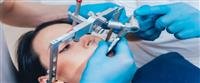

Sometimes you may have to resort to maxillary expansion surgery, so what is this process? How is it done? The answer and many details we review in this article.
The most important information about the process of expanding the upper jaw, the reasons for performing it, and other important information that we present to you in the following article:
Maxillary expansion: when is it performed?
Jaw expansion surgery is usually performed after growth has stopped, that is, from 14-16 years for females and 17-21 years for males.
Patients who have crooked teeth or crowded teeth due to a narrow jaw need this procedure, as it is difficult to put braces to treat these problems without resorting to tooth extraction.
Patients who suffer from problems in the symmetry of the upper or lower jaw, or a small chin, resort to this operation.
Sleep apnea is one of the problems that may be caused by narrowing of the upper jaw and treated by jaw expansion.
Many people suffer from malocclusion due to problems in the jaw or teeth, and this problem can be eliminated by widening the upper or lower jaw.
It is worth noting that the process of expanding the upper jaw is not the only way to treat the above problems, and the doctor may help you in treating them using what he deems appropriate based on your health condition.
Maxillary expansion: how is it performed?
Here are the most important details about maxillary augmentation:
1. Counseling
Consultation takes place with the orthodontist as well as the surgeon who will perform the procedure.
2. Preoperative appointment
All orthodontic procedures begin with an appointment for the doctor to take an X-ray or by taking a scan to make a dental model and the images and models are used to plan how the procedure will take place.
3. Anesthesia
General anesthesia is used with a breathing tube placed through the nose.
4. Surgery
Incisions are made in the mouth and sometimes additional small incisions are made on the cheeks, then the doctor begins to fill the bones in the planned areas to be fixed with plates and screws, and the surgeon may resort to leaving a splint as a protector attached to the teeth.
5. Evaluation of results
The results of jaw surgery are visible immediately, but become more noticeable after swelling and bruising disappear within a month or two of the surgery.
Maxillary expansion surgery: the recovery phase
These include
After the procedure, you need to stay in the hospital for at least one night in most cases.
When you feel pain, the pain is controlled by giving you intravenous painkillers prescribed by the anesthesiologist, and you will be given some antibiotics.
It is important to know that you need to take at least one to two weeks off, whether from work or study, to get enough rest.
Do not worry about the stitches, as they are dissolved stitches that gradually dissolve within one to two weeks. As for swelling and bruising, they usually disappear within two to three weeks at least.
For the first two weeks after surgery, a diet that includes eating soft, easy-to-chew foods is recommended.
It is important to maintain oral hygiene by brushing and rinsing with salt water.
It usually takes about 6 weeks for the jaw to heal after surgery.
Maxillary expansion surgery: complications
Some potential complications of the surgery may include
Bleeding.
Having a jaw fracture.
Loss of part of the jaw.
The jaw does not return to its original position.
The need for an additional operation.
Numbness and tingling as a result of a nerve injury.
Infection.
Changes in the nasal cavity.
Problems with the temporomandibular joint.