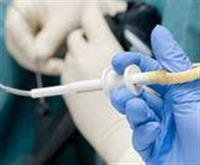
A breast biopsy is an invasive examination in which a sample of breast tissue is taken for close examination. A biopsy is often used when previous tests indicate the possibility of a problem in the breast, such as discovering a solid mass during a manual examination or mammography. (Mammography) without it being possible to reach an accurate diagnosis by non-invasive examination methods.
There are several ways to perform a breast biopsy, whether it is through
Removing a piece of tissue with a needle (Needle biopsy).
Fine needle aspiration (FNA).
Open biopsy surgery, which enables the extraction and resection of a part of the tissue during an open biopsy surgery, but this possibility is not widespread.
When is the examination performed?
A breast biopsy is often performed when a lump or suspicious area is detected in the breast, whether by manual examination or radiological scanning, and an accurate diagnosis is needed for this condition.
In most cases, the examination aims to find out whether the detected mass is a tumor, and if so, is it benign or malignant (cancerous).
category at risk
Patients with heart and lungs, as well as pregnant women, must inform the doctor of this before conducting the examination. He must also be informed if the patient is taking blood-thinning medications or anticoagulants. The patient must inform the doctor if he is allergic to certain medications.
It should be noted that it is not recommended at all to perform a breast biopsy for those who suffer from blood clotting or bleeding disorders, and in order to perform a breast biopsy, the patient''s consent must be obtained by signing a consent form.
related diseases
Diseases related to this examination include the following
Benign lumps in the breast, such as
Fibroadenoma.
Simple breast cyst.
Fibrocystic breast tumors.
Lymphoma.
Carcinoma of the breast.
Infectious diseases, such as: breast abscess.
The method of conducting the examination
The preparations depend on the type of examination to be performed. For FNA or needle biopsy, the patient is injected with local anesthesia in order to numb the examination site only.
In the case of an open biopsy, that is, through surgery, there is a need for general anesthesia and complete fasting for a period of 8 to 12 hours before the examination.
during the examination
We explain to you what happens during the examination, according to the type of procedure followed, as follows:
Aspirate the cells with a needle
A needle aspiration is performed under local anesthesia in the breast area, by injecting the anesthetic into the skin around the required area, after that the doctor s a long needle into the breast tissue.
In some cases, there is a need for an ultrasound examination in parallel with sample aspiration, in order to know the exact location of the needle during its ion. After this, the needle is extracted while it carries a limited number of tissue cells, which will be sent for microscopic examination.
After conducting the examination, the examination site is bandaged. This examination takes between 10 to 15 minutes.
Core needle biopsy
Here, too, there is a need to inject a local anesthetic into the place.
In some cases, there is a need for ultrasound imaging while taking the sample, in order to know the exact location of the needle. Later, the doctor s a needle with a special head of 3-4 millimeters in the exact place and through it withdraws part of the breast tissue.
After taking the sample, the examination site is bandaged. This examination usually takes 10 to 15 minutes.
Open biopsy
What is meant here is to take a sample during a surgical procedure under general anesthesia, a test that takes about 60 minutes.
after examination
Often, special problems are not expected after a breast biopsy. However, the dressing must be kept on the wound for 24 hours and it is not permissible to get it wet. Sometimes additional bleeding may occur, which requires stopping it with another dressing. It is also not permissible to remove the existing dressing for fear of entering contaminated agents into the place. .
The doctor must be informed of every change that occurs after the examination, such as bleeding, dizziness, or pain at the examination site, and the like. In addition, if the examination site becomes red, swollen, or pus is secreted, the doctor must be informed immediately.
Analysis of the results
The results of a breast biopsy will appear within a week or two in the form of a pathology report. Doctors check the general appearance of the tissue, the number of cells, their shape, size, and if they have some other features that may indicate an abnormality.
Often there will be a description of the healthy areas and tissues, and there will be a detail about the abnormal tissues that were found.
Benign findings in the breast can include
fibroadenoma.
Lipoma.
Fibrous tumors in the breast (fibrocystic).
Calcifications.
Atypical hyperplasia.
Malignant findings in the breast may include
Invasive breast cancer.
Localized cancer.
Data that may indicate the presence of inflammatory or infectious diseases may include, for example, breast abscess.