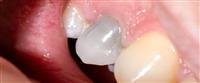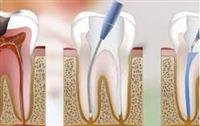
What are the reasons for the emergence of spaces between the teeth? And how is it possible to treat and close these voids? You can find the answers in the article.
Let us learn what follows about the dental spaces or what is scientifically called the difference (Diastema), and the most important information related to them:
What are dental spaces?
Dental spaces are defined as the spaces between two or more adjacent teeth in the mouth, usually at least 0.5 mm in length.
The visible spaces between the teeth may be so small that they are difficult to notice, or they may be large and clear.
Teeth often grow with visible spaces separating each other during childhood and the milk teeth, but these spaces quickly fade as soon as the milk teeth fall out, as permanent teeth grow after that, which are compact in nature without spaces separating them in most cases.
Symptoms of tooth voids
The symptoms of this condition are only embodied through the appearance of a void in the jaw or the emergence of a space separating two adjacent teeth, but in some cases the teeth on both ends of the empty space may begin to loosen as a result of infection in the gums, and these are some of the symptoms that may accompany gum infections:
Bad breath.
Redness, tenderness, or swelling of the gums.
The gums begin to gradually recede from some of the mouth''s teeth.
Loose teeth.
Causes of tooth voids
Here is a list of the most prominent possible reasons for the formation of spaces between the teeth:
1. The big jaw
In some cases, the jaw may be relatively large, especially when compared to the size of the teeth, a condition that may cause imbalance in the alignment of the teeth between the jaws, and may cause the appearance of spaces between the teeth.
2. A missing tooth or an extra tooth
Some children may be born with a jaw that contains an extra tooth or a missing tooth, which are conditions that may cause the formation of tooth spaces, as follows:
When there is a missing tooth: the rest of the teeth may grow normally while the place of the missing tooth remains empty, which leads to the appearance of a clear void in the jaw.
When there is an extra tooth in the jaw: This tooth may hinder the emergence of some of the teeth adjacent to it, which may cause a void to appear between the teeth.
3. Periodontitis
Periodontitis is one of the types of acute inflammation that may affect the gums, which usually arises due to neglect of oral and dental hygiene.
This health problem can, over time, cause the bone to melt in an area of the jaws, which may cause some teeth to move from their place, leaving spaces between two or more teeth.
4. Loss of teeth
Dental spaces may arise as a result of the loss of a tooth in the upper or lower jaw, and a person may lose one or more teeth as a result of one of the following:
Baby teeth fall out in children, but the space here is temporary and soon closed again with the emergence of permanent teeth.
Loss of permanent teeth due to any factor at any age.
5. Other reasons
Here are some additional factors that may increase your chances of developing cavities
Injury to the tongue tied, especially acute cases.
Presence of smaller than normal teeth.
An enlargement of a special tissue located in the inside of the upper lip called the labial frenum.
Heredity and genes, as the chances of developing dental voids in children and adults increase when there are other members of the family with dental voids.
Adopting some unhealthy habits, such as: the habit of sucking fingers, and the habit of pushing the tongue forward.
Repair and treatment of dental cavities
There are several methods and treatment methods that can be used to close the gaps between the teeth, here is a list of the most prominent of them:
1. Veneers
It is possible to use ceramic veneers to close the gaps in the teeth, where a ceramic layer is installed on the teeth surrounding the void area, so that this layer is slightly larger than the area of the original tooth, to give the tooth an additional volume that makes the space adjacent to it less clear, and in some cases it is possible for this method to It helps to completely close the gaps in the teeth.
2. Orthodontics
This type of treatment is one of the common methods that are often resorted to to close the gaps in the teeth, and even if the existing gap is limited to an empty space between two teeth only and no more, the patient often has to install full orthodontics.
Orthodontics gradually imposes enough pressure on the teeth to gradually move them from their place, which may help close the tooth spaces after a period of time has passed.
3. Dental implants or dental bridges
In some cases, dental implants or a dental bridge may be used to close the voids, as follows:
Dental implants: where the patient undergoes several consecutive sessions during which metal screws are installed in the jawbones, then these screws are used to install the new dental implant.
Dental bridge: In this process, an artificial tooth is installed in the void area, and the new tooth is attached to the adjacent teeth using special techniques.
4. Other methods
These are some of the other remedial procedures that can be used to help close dental spaces:
Treatment of gum infections.
surgery.
Wear transparent and movable braces at home.