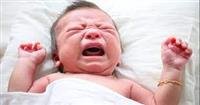

Your child may suffer from convulsions during a fever, known as heat convulsions in children, the most important information about which is in this article.
All you need to know about febrile seizures in children, or what is known as febrile seizures, is available to you through the following article:
Heat cramp in children
It is a convulsive seizure that may occur in children between 6 months - 5 years old with a fever or a high temperature above 38 degrees Celsius. These convulsions may last for a few minutes and then stop on their own, but the fever may continue after the convulsion stops for some time.
Heat cramp in children may seem dangerous, but it often stops without treatment and does not cause any complications or other health problems, but some children may feel sleepy after the heat cramp ends.
Studies show that the use of some combinations of fever-reducing medications for children may reduce the risk of developing heat cramp in children, and others may not prevent the child''s risk of developing cramp again.
Causes of heat cramp in children
The cause of heat cramp in children is unknown, but as we mentioned earlier, its occurrence is associated with a high body temperature of the child, which may be caused by an infection, such as: chickenpox, influenza, otitis media, or tonsillitis, and in rare cases after receiving Vaccines.
It is worth noting that there may be a genetic relationship to heat cramp, as the chances of heat cramping increase if a close family member has had it.
Symptoms of heat cramp in children
Heat cramp in children is accompanied by many symptoms, and it is worth noting that the child may not have all the symptoms in the following list:
The child''s temperature rises rapidly.
Loss of consciousness or fainting for approximately 30 seconds to 5 minutes.
A general contraction of the muscles that may last from 15-20 seconds.
Violent, rhythmic muscle contractions that usually last 1 to 2 minutes.
Biting the child with the inside of his cheek or tongue.
Grinding of the teeth or jaw.
Deviation of the eye to one side or rolling it back.
Loss of control of urine or stool.
Shortness of breath or difficulty breathing.
bluish color of the skin
What can you do when a child has a heat cramp?
Parents must closely monitor the child if the child suffers from heat cramp and perform the first aid mentioned in the following:
Remain calm and note when the spasm begins. If it continues for more than 5 minutes, call an ambulance immediately and take the child to the nearest emergency room for diagnosis and treatment.
Call 911 if the spasm lasts less than 5 minutes but the child doesn''t seem to be recovering after it''s over.
Gradually place the child on a protected surface, such as the floor, to prevent any accidental injury to the child, and avoid holding the child during a convulsion.
Lay the child on his or her side or stomach to prevent choking. Try to gently remove anything stuck in the child''s mouth. Avoid putting anything in the child''s mouth during a spasm that could block the airway and make breathing difficult.
Avoid putting a child suffering from heat cramp in water to lower his temperature.
Go to the nearest doctor and as soon as possible if this is the child''s first seizure of heat, as soon as the convulsion ends, to check the cause of the fever, especially if other symptoms appear on the child, which may be signs of serious infections.
Prevention of heat cramp in children
There is nothing that can be done to prevent a child from developing heat cramp, but the safest way is to keep the child as cool as possible when he has a fever, which will make him feel comfortable, but will not prevent heat cramp in children.
The best ways to lower your child''s temperature are by
Take off your child''s heavy clothing so that he wears only one layer, and cover him with a light blanket while sleeping.
Encouraging the child to drink more fluids, such as: milk, water, or fresh juices.
Give the child a lukewarm bath, and avoid placing him under cold water because it may cause a rise in body temperature.
Ensure that the child''s room is neither too hot nor too cold.
Giving the child fever-reducing medicines, such as: Paracetamol, which may give the child relief, while making sure to follow the doctor''s instructions regarding the appropriate dose for your child.