most important of them
Many women suffer from the problem of ovarian cyst, which is detected by going to the doctor, so what are the symptoms of ovarian cyst?
Knowing the symptoms of polycystic ovaries would help you to go to the specialist doctor in order to undergo appropriate examinations and to detect and treat the infection.
Symptoms of polycystic ovaries
Most cases of ovarian cyst are not accompanied by any distinct symptoms, but there are some cases in which symptoms appear, but these symptoms are similar to other cases as well.
This means that it is important to consult a doctor if these symptoms are noticed in order to undergo an appropriate examination and diagnose the condition. In general, the symptoms of polycystic ovaries include the following:
1. Irregularity and pain in the menstrual cycle
One of the most important symptoms of polycystic ovaries is the irregularity of your menstrual cycle. In some cases, when menstruation comes, it is accompanied by severe pain, and you may notice that the cycle is light or heavy more than usual.
2. Pain in the pelvic area
If you have polycystic ovaries, you may notice continuous pain in the pelvic area, and this pain may extend to the lower back and groin area.
It may appear clearly before or after your period, and this is a symptom of ovarian cysts.
Symptoms of polycystic ovaries
3. Dyspareunia
Sometimes an ovarian cyst can cause dyspareunia, which means that an affected woman may suffer from pain during intercourse and a feeling of discomfort in the abdominal area afterwards.
4. Problems with bowel movement and urination
This includes feeling pain during defecation and increasing pressure on the intestines, in addition to the constant feeling of the need to defecate.
In addition, there may be some problems in the process of completely emptying the bladder of urine, and continuous and frequent urination.
5. Hormone imbalance
One of the symptoms of ovarian cysts is also an imbalance of hormones in the body, but it is not very common, and an imbalance of hormones may cause some symptoms, the most important of which is the appearance of hair in unwanted places and a change in the size and sensitivity of the breast.
6. Other symptoms
Other signs and symptoms of PCOS include
Increased body hair.
young love.
lightness of hair
infertility.
oily skin.
Baldness similar to male pattern baldness.
What is polycystic ovaries?
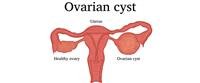
After identifying the most important symptoms of ovarian cyst, it is now important to know what ovarian cyst means, as they are nothing but cysts formed due to the accumulation of fluid in a thin membrane inside the ovary.
The size of these bags varies from very small to large, about the size of an orange.
Most cases of ovarian cyst are simple and not worrisome, and they usually affect women in the childbearing period, so that they show the signs of ovarian cyst that we mentioned previously.
Types of ovarian cysts
After addressing the most important symptoms of ovarian cyst, it must be mentioned that there are two main types of ovarian cyst infection, which are as follows:
1. Functional polycystic ovaries
It is the most common type, and it is harmless and is formed as a result of the hormonal changes that a woman’s body goes through during the menstrual cycle, and the life period of this type of cyst is often short.
2. Pathological polycystic ovaries
It is less common compared to the first type, and it appears for completely different reasons, and it may require medical intervention in order to treat it.