information
What is placental abruption? Is it a serious condition? What are the types and methods of treatment? Full details you can find in the article.
Pregnancy is one of the most beautiful periods of a woman’s and mother’s life, but it is not without some complications, some of which are dangerous, including placenta previa, or what is called placenta praevia. What is placenta praevia? Is it a serious complication during pregnancy? Details are in the following:
What is placental abruption?
The placenta is a temporary organ formed in a woman''s body with the aim of nourishing the fetus during pregnancy, providing it with the necessary oxygen and removing waste from it.
With the growth of the pregnant belly and the increase in the size of the fetus, the placenta shifts from its place and expands and grows in turn.
The placenta is usually located at the bottom of the uterus during the first months of pregnancy, and it begins to rise with the passing of the months of pregnancy to the top, and by the advent of the third trimester of pregnancy, it is normal for the placenta to have become at the highest point in the uterus.
Normally, the presence of the placenta at the top of the uterus before delivery makes the cervix empty and ready for the passage of the fetus.
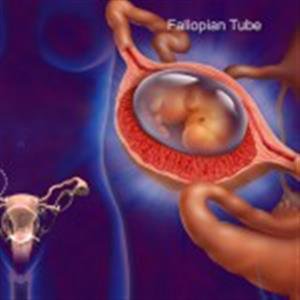
In some cases, the placenta may attach to the lower region of the uterus in a condition called placenta praevia, in which the placenta partially or completely covers the cervix in the last months of pregnancy.
This condition may cause severe bleeding before or during childbirth, and the affected pregnant woman needs to rest in bed throughout the months of pregnancy.
Types of placental abruption
Placental abruption, or placenta previa, has 4 types, which we will review in the following:
Partial placental abruption: where the placenta only partially covers the cervix, making natural delivery a possible option.
Placental abruption in mid-pregnancy: This type begins very early or in the middle of pregnancy, when the option of a normal delivery is possible.
Marginal placental abruption: here the placenta does not cover the cervix but presses on it.
Complete placental abruption: This is the most dangerous type, as the placenta completely covers the cervix, and it is preferable to resort to a cesarean section, or even to induce labor early.
Symptoms of placenta previa
There are some symptoms that a woman may feel that require a doctor’s consultation if she notices them, and these are the most important of them:
Light or severe vaginal bleeding, which is the main symptom of placenta previa, and this bleeding may be intermittent every few days or weeks.
Cramps and severe pain.
Vaginal bleeding after intercourse.
Vaginal bleeding, especially in the second half of pregnancy.
Causes of placental abruption and risk factors
The following factors may play a major role in placental abruption, affecting some women and not others:
Pregnancy after the age of 35.
woman smoking
A defect in the shape of the uterus.
Previous miscarriage.
The woman underwent one of the following surgeries earlier
Caesarean.
The process of removing fibers from the uterus.
Abnormal fetal position.
Twin pregnancy.
Placental abruption treatment
The treatment used and the way to control the placenta previa depends on several factors, the most important of which are:
The amount of bleeding that occurs when pregnant.
gestational age.
Fetal health.
The location of the placenta and the position and position of the fetus in the uterus.
Doctors usually advise women to rest in bed as much as possible throughout pregnancy, as there is no final treatment for the condition, but there are preventive measures that can be taken to reduce the risk, the most important of which is lying in bed.
Placenta previa risks
Due to the presence of the placenta at the lowest point in the uterus, natural childbirth and the start of cervical dilatation that occurs may cause the placenta to separate from the fetus first while it is still in the uterus, which may cause bleeding and risk to the health of the mother and fetus.