to be dealt with before it gets worse
What is dental crowding? What are the causes of this condition? And what are the methods that can be followed to treat it? The most important information you will find in the following article.
Let''s learn what follows about crowded teeth-overcrowding and some information related to it.
What is the case of crowded teeth?
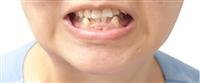
Crowded teeth is an oral problem that is one of the various types of malocclusion problems, in which the empty spaces in one or both jaws are insufficient for some of the permanent teeth to erupt normally and align in a regular manner.
The state of crowded teeth may negatively affect the health and appearance of the teeth, due to the lack of space that the teeth need to grow straight and regular in the jaw, this may cause increased pressure on the teeth, which may lead to an increase in the chances of developing many potential complications if the patient does not receive treatment. necessary at the right time, such as:
Tooth wrap.
Teeth growing in the same location of the jaw overlapping.
Crooked teeth.
tooth decay.
Periodontal disease.
Jaw deviation, and the complications that may accompany it, such as: headache and difficulty chewing.
Damage to the jaw joints.
It should be noted that failure to correct the problem in childhood may cause the need to resort to expensive treatments in adulthood.
Types and degrees of dental crowding
Depending on the severity of the problem, which varies from case to case, dental crowding is usually classified into three different degrees, as follows:
Slight dental crowding: This type of dental crowding usually arises as a result of a slight wrap in one of the front teeth in the upper or lower jaw.
Medium-severe dental crowding: This type arises as a result of the overlap and intersection of 2-3 teeth from the front teeth in the upper or lower jaw.
Acute dental crowding: In this type, the majority of the front teeth in the upper or lower jaw grow overlapping and on top of each other.
Causes of crowded teeth
Here is a list of the most important factors and causes that may lead to crowded teeth
Genetic causes, such as: a small jaw since birth, and the eruption of large teeth that are not proportional to the size of the jaw.
The early fall of milk teeth, which may lead to the movement of teeth in the jaw to fill the space that has just been emptied.
The inability of the permanent teeth to make their way outside the gums to replace the milk teeth, which may cause the milk tooth to loosen and then return to adhere to the gum tissue tightly, in a situation that may cause crowding of the teeth if the milk tooth is not extracted.
The growth of milk teeth in a compact manner and without sufficient spaces between them.
Other factors may cause malocclusion and crowded teeth, such as: the growth of tumors in the mouth area, the habit of sucking the finger, buried molars, the appearance of an extra tooth in the mouth, exposure to an accident in the jaws, and dental fixtures that are not suitable for the size of the jaws and teeth.
Symptoms of crowded teeth
These are the most prominent symptoms that may appear on a person with this oral problem:
Toothache, as some teeth may begin to put pressure on the teeth adjacent to them, which may cause pain in certain areas of the mouth or general pain that extends all over the mouth.
Crooked teeth, or the growth of teeth on top of each other.
Pain in the back of the jaw, which may arise as a result of the inability of the wisdom tooth to make its way out of the gums due to crowding of the teeth and the lack of spaces in the jaws.
General changes in the appearance of the occlusal and jaws, which often develop and gradually worsen over time.
Treating crowded teeth
Crowded teeth can be treated in several different ways, such as
1. Extraction of one or more molars
In some cases, the doctor may resort to extracting one or more molars, especially when the jaw size is small in an area that cannot accommodate the growth and eruption of the normal number of teeth.
This type of procedure may also help make room for some dental treatments to work more effectively, such as orthodontics. Extracting molars allows the orthodontist to move the teeth in the mouth freely to push them back to their natural positions.
2. Calendar of different types
Fixed or mobile braces may help correct and treat crowded teeth, and these are some of the types of braces that can be resorted to: fixed metal braces, ceramic braces, and transparent braces.
3. Dental scales
In some moderately severe cases, dental veneers can help correct crowded teeth, especially in adults, where artificial veneers are installed on the surface of the tooth that may help reduce the severity and appearance of crowding by causing certain changes to the tooth, in terms of color or color. shape, length or size.
4. Other treatments
Many other treatments can be used to correct crowded teeth, such as
Installing a dental retainer.
Surgery to correct certain jaw or occlusion problems.
Expanded jaw installation.
It should be noted that it is not possible to treat this type of oral problem with home methods, so the dentist must be resorted to to develop an appropriate treatment plan.