Patching operations cause some effects to appear, so how can the effects of patching operations be treated? This is what we will learn about in the following article.
Skin grafting operations consist of taking part of the healthy skin of the patient and applying it to the area where the skin is to be grafted, but it is almost impossible to perform skin grafting operations without obtaining some effects or scars resulting from cutting parts of the skin, so we will learn in the following article the importance and methods of treating the effects of Patching operations:
The importance of treating the effects of grafting operations
Traces of grafting operations often cause deformation in the skin to cause pain, itching and discomfort to the patient, and there are many factors that affect the amount of discomfort resulting from these effects, as they may appear in a different color than the surrounding skin or may differ in thickness, which causes unevenness with the surrounding skin .
Methods of treating the effects of grafting operations
There are many ways to treat the effects of grafting operations, including
Camouflage with cosmetics
There are some special cosmetics to cover and camouflage the traces of the skin resulting from some skin diseases or operations, and cosmetics are often used as one of the methods of treating the effects of grafts on the face.
Laser therapy
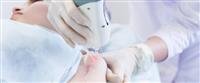
Laser is used in several forms to treat the effects of grafting operations, where laser treatment aims to simplify scars or remove scar pigmentation.
The following types of laser treatments are used:
1. Vascular laser
Vascular laser causes the blood vessels supplying the skin scars to shrink, which reduces the red coloration of the scars. It is worth noting that vascular laser treatment is done without the use of drugs.
2. Laser skin resurfacing
Two types of lasers are used to resurface the skin, namely the carbon dioxide laser and the erbium laser, where the carbon dioxide laser is used for deep scars, while the erbium laser is used for superficial scars in people with darker skin tones.
silicon
Silicone is one of the methods of treating the effects of grafting operations, especially hypertrophic scars or keloid scars, as silicone sheets and gels are used to smooth these scars.
Silicone sheets or gels are applied to the tracks for 12 hours a day for at least 3 months.
It is worth noting that silicone may help get rid of the itching feeling associated with scars, but silicone strips or gel should not be used on open wounds.
steroids
Steroids can be used to treat keloid scars and hypertrophic scars as a topical application directly on the scars, or with steroid injections.
Steroids help smooth scars and reduce redness, itching, and burning associated with scars.
Injections are used by injecting the skin with steroids over the course of 3 injections, separating each injection from injection for a period ranging from 4 to 6 weeks, and treatment can be completed for a period of up to several months in the event that developments in the improvement of effects are noticed.
As for topical treatment, it is done by using steroid tapes that are placed on the site of the effects for 12 hours a day.
Cryotherapy
Cryotherapy is the treatment of the effects of grafting operations by freezing keloid scars with liquid nitrogen. Cryotherapy can contribute to simplifying scars and preventing them from growing if the treatment is used at the beginning of scar formation.
Cryotherapy is more effective in treating the effects of grafts when used in combination with steroid injections.
Fillers
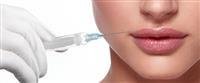
Fillers such as collagen or others can be used to treat some sunken scars resulting from grafting operations, but this method is often expensive and not permanent, as you need to repeat the process several times to maintain the results.
skin tingling
Skin pricking is a repeated treatment by rolling a device filled with tiny needles over the skin, which improves the external appearance of the skin.
Pressotherapy
Compression therapy is used to treat large keloid scars that appear after grafting by wearing elastic bandages over the scar site day and night for 4 to 6 months.
Silicone sheets or gels can be used with pressure therapy to improve the appearance of scars over a long-term period.
surgery
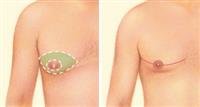
In the event that the treatment of the effects of grafts by the previous methods is not successful, surgery is resorted to by removing scars or dermabrasion.
The surgery aims to make the scars look more natural, reduce their visibility, or loosen some of the scars at the joints to facilitate movement.
Radiation therapy
Radiation therapy can be used in addition to surgery to reduce the risk of keloid scars recurring in the future.
Tips for treating the effects of patching operations
There are some tips that help reduce the appearance of effects, including:
Use creams rich in Vitamin E.
Moisturizing by massaging the effects of moisturizing creams.
Use sunscreen on the traces to protect them.