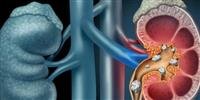
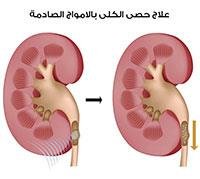
Kidney lithotripsy is one of the techniques that is performed in some cases in which the stones cannot pass out of the body naturally, when the diameter of the stones is greater than 2 centimeters, causing a blockage in the stream of urine, or in cases where the stones cannot be broken up by Extracorporeal shock wave lithotripsy - ESWL.
The procedure to break up kidney stones may be associated with many risks, such as: bleeding, perforation in the kidney, injury to neighboring organs such as the bladder or intestines, in addition to affecting normal kidney functions.
Although lithotripsy is an effective process, with a success rate of 88%, it is technically complex.
before performing the operation
Most of the time, the doctor prescribes some antibiotics to reduce the chances of infection after the operation.
Operation steps
Steps to break up kidney stones include the following
Anesthesia of the patient, in many ways, as it can be general anesthesia, local anesthesia, or spinal anesthesia.
A small incision is made in the back, a hollow tube is ed into the kidney, and a detector is passed through it.
The doctor pulls the stones through the tube, after breaking them into smaller pieces.
after the procedure
The patient stays for a day or two after the operation in the hospital to ensure that his condition is stable, and it is usually recommended to avoid lifting any heavy loads for up to 4 weeks, while he can return to work after one week of the operation.