Have you ever heard of an allergy to water? Here is the most important information about water allergy, its symptoms and causes.
Although water is the basis of life and a person cannot live without it, some people may suffer from side effects from water or the so-called water allergy. So what is an allergy to water?
What is an allergy to water?
Water allergy or water urticaria is a rare form of hives. Hives are a skin disease that causes intense itching, redness, and swelling of the skin as a result of exposure to a substance that causes a person''s allergy.
Allergy to water or watery urticaria results when a person''s skin comes into contact with water, regardless of the temperature of the water. Allergy to water often affects females, and symptoms begin to appear with the onset of puberty.
Causes of allergy to water
In fact, the main reason for allergy to water is unknown, but there are some theories that expect some causes, including:
The presence of some substances in the water can interact with the skin, increase the reaction of the immune system, and increase the amounts of histamine secreted by mast cells, which leads to the appearance of symptoms of urticaria and allergy on the skin.
Water can interact with some substances on the skin of people allergic to water, and this results in a toxic substance that negatively affects the skin, and leads to the appearance of symptoms of water urticaria.
Symptoms of a water allergy
Here are the symptoms of water hives or water allergy more clearly, as symptoms usually appear 20 to 30 minutes after exposure to water:
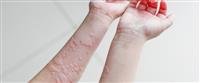
It begins with the appearance of rings on the skin 1-3 mm in size, surrounded by redness of the skin 1-3 cm in size, and is accompanied by itching, burning, tingling or numbness.
Sensitivity begins to appear on the torso, palms, and arms.
The allergy or hives spreads to other parts of the body even if it does not come into contact with water.
Water sensitivity often resolves on its own within 30 to 120 minutes after preventing contact with water.
More serious symptoms rarely appear in some people, so that the allergy becomes global, and the person suffers from shortness of breath and wheezing.
Diagnosis of allergy to water
It is initially diagnosed by examining allergy symptoms, and a water challenge test is requested to confirm the incidence of water urticaria.
Water at a temperature of 35 degrees is applied to the skin and left for 30 minutes, and then making sure that signs of allergy to water appear to confirm that the person is allergic to water.
Water allergy treatment
A person cannot completely abstain from water, as this is impossible, so some medications can be used to relieve the symptoms of allergy to water, including:
Antihistamines: Antihistamines are the first choice in relieving symptoms of allergy to water, such as cetirizine, loratadine, and fexofenadine.
Creams and ointments: Some creams and ointments can also be used that act as a buffer layer between the skin and water and reduce contact, such as: Vaseline.
Phototherapy: Ultraviolet light can be used to relieve the symptoms of a water allergy in some people.
Omalizumab: Omalizumab is an immunotherapy drug that is usually used in the treatment of severe asthma, and some trials have shown its effectiveness in relieving symptoms of allergy to water.