What is strabismus in infants? And what are its reasons? What are the possible symptoms? What are the possible treatment methods? Read on to know more.
Strabismus is one of the common things observed in infants, and it occurs in the first months of the infant’s life, and it is usually normal due to the weakness of the child’s muscles at this age and his inability to focus well, but it may have pathological causes in some other cases.
More details about strabismus in infants in the following article
Strabismus in infants
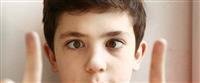
Crossed eyes, or the so-called squint, is a condition in which the eyes are deviated from their correct position and point towards two different directions. The squint can occur at any age, but its occurrence is more common in children and infants, as the percentage of children who develop squint reaches 5%, and the chance of infection for female and male children is equal.
An infant may suffer from strabismus intermittently during the day, or he may suffer from it consistently all the time. The condition of intermittent strabismus may worsen when the eye muscles are tired at the end of the day, for example, or when the child is ill. Intermittent strabismus usually occurs during the first months and then improves in most infants after the age of 3 months.
Symptoms of strabismus in infants
Since there are many types of infant squint, symptoms can be classified according to the type of squint as follows:
1. Symptoms of internal strabismus (Esotropia)
In this type of squint, one or both eyes turn inward, that is, towards the nose. This type is the most common type of squint, affecting 2%-4% of children.
2. Symptoms of Exotropia
In this type of squint, one or both eyes turn outward, ie towards the ear. This type affects 1%-1.5% of children.
3. Symptoms of Hypertropia
In strabismus, both eyes are skewed, and one eye is abnormal and directed upwards compared to the other. This type affects one child for every 400 children.
4. Symptoms of Hypotropia
This type of strabismus is the opposite of the strabismus, in which one eye is directed downward compared to the other.
5. Other symptoms that require a visit to the doctor
In some other cases of squint in infants, the squint is not clear and you cannot identify it easily, so you should visit a specialist doctor if you notice the following symptoms, regardless of the condition around your child''s eyes, including the following:
Frequent staring, especially when the lighting is bright, may be an indication that the child suffers from double vision of things.
Rolling over and tilting the head may be a sign that your baby is trying to place objects within his field of vision.
Causes and risk factors for amblyopia in infants
Causes and risk factors for strabismus in infants include
Cerebral Palsy.
Hydrocephalus.
Down syndrome
brain tumor
Premature birth.
Cataract disease.
An injury to the eye.
Babies with low birth weight.
Children with farsightedness.
The presence of a family member who suffers from strabismus increases the chance of a child suffering from strabismus as well. However, many children with strabismus may not suffer from any of the aforementioned problems.
Treatment of strabismus in infants
The treatment plan followed in the treatment of strabismus in infants may include one or more types of treatments, depending on several factors, including the age of the child. Treatment methods include the following:
Prescription eyeglasses or surgery if the child is infant or very young and has internal strabismus.
Patches or disfigurement of the healthy or strong eye to force the child to use and straighten the deviant eye.
Surgery if the condition does not improve with glasses and patches, as surgery helps to correct the alignment of the eyes.