
information
Have you ever heard of keratoconus? What are its symptoms and causes? Can it be treated? Here is the most important information and details about this disease in the following article.
Keratoconus is a rare eye condition, so what should you know about it? Details are as follows:
What is keratoconus?
First of all, the cornea is the visible outer part of the eye that protects the different parts of the eye from external factors such as wind, dust, etc. In normal cases, the cornea takes the form of a dome or a slightly convex surface.
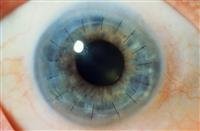
But when infected with this disease, the shape of the cornea appears different from what was mentioned, as it takes a cone-like shape, and its curvature increases significantly to appear more prominent outside, or it may appear significantly prominent downward.
Causes of keratoconus
Scientists are still unable to determine the main cause of this disease, but they suggest that these factors may increase the chances of infection:
Inheritance may play a role in the incidence of this condition, especially if the family history of the disease contained previous injuries, including the parents.
Eye allergy.
Excessive rubbing of the eyes.
Lack of antioxidants inside the eye for some reason.
It is worth noting that the shape of the cornea begins to change to become closer to the cone when the collagen bonds in the eye weaken as a result of things such as a lack of antioxidants that strengthen these bonds.
Symptoms of keratoconus
As the cornea begins to take a conical shape, these symptoms begin to appear on the patient:
Vision problems, such as: blurry vision, and visible halos around everything the patient sees at night.
Scar in the cornea of the eye and clear swelling in the eyeball and redness.
Seeing straight lines crooked or wavy.
Sudden vision problems without warning.
Remarkable sensitivity towards different light sources.
Inability to wear contact lenses as usual.
Seeing surrounding objects as if they have one, two or more copies.
It is worth noting that the symptoms often begin to appear in one eye first and then appear in the other eye, and the symptoms in both eyes do not necessarily have the same severity, and the symptoms may appear suddenly or disappear suddenly, as the matter differs from one patient to another.
When does keratoconus appear?
This disease usually appears on the patient in the last years of adolescence, and symptoms worsen during a period ranging between 10-20 years, especially those related to the ability to see clearly.
In very few cases, this disease may appear in the early childhood years, thirties, or forties.
Diagnosis of keratoconus
This disease is usually diagnosed by an ophthalmologist by following the following steps and procedures:
Have an eye exam.
Examination of the family''s medical history to check for previous cases of the disease.
Subjecting the patient to the following examinations: refraction examination, slit lamp examination, and computerized keratomileusis.
Keratoconus treatment
The method of treatment depends on the symptoms apparent to the patient and their severity, as follows:
Use special glasses with slightly thick lenses in minor cases.
Using some special treatments such as: collagen cross-linking, and corneal transplantation.
Placement of very small special medical devices inside the eye to correct and improve vision.
The doctor prescribed special medications such as anti-allergic drugs to relieve itching in the event that there is an annoying itching accompanying the condition.
Tips for keratoconus
When infected with this disease, you should pay attention to the following important things:
Do not rub the eye, no matter how severe the itching, as this may cause significant damage to the eye.
Avoid certain refractive procedures, especially LASIK.