
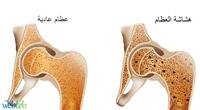
Osteoporosis causes the bones to become so weak and brittle that even doing very simple actions that require minimal stress, such as bending forward, lifting a vacuum cleaner, or even coughing, can cause bone fractures, as in most cases this weakening of the bones is due to To a decrease in the level of calcium and phosphorus, or a deficiency in other minerals in the bones.
Osteoporosis may often lead to bone fractures, mostly in the bones of the spine, pelvis, hips, or palm joint. Although it is believed that this disease mostly affects women, osteoporosis may affect men as well, and in addition to people with osteoporosis, there are many who also suffer from low bone density.
It is never too late or too early for a person to do some things to prevent the onset of osteoporosis, as every person can take certain measures to maintain the integrity of his bones.
Categories most susceptible to osteoporosis
The National Osteoporosis Organization advises women who are not receiving any oestrogen-containing therapies to have a bone density scan if:
Attaining the age of 65 years, regardless of whether or not the woman belongs to any of the groups most at risk of developing osteoporosis.
The woman has reached menopause, especially if she belongs to one of the groups most at risk of developing osteoporosis, in addition to having at least one accident with a bone fracture.
Suffering from any of the medical problems associated with the spine.
Receiving any of the drug treatments that may cause osteoporosis, such as Prednisone or the like.
Suffering from: type 1 diabetes, liver disease, any kidney disease, or any disease that may affect the thyroid gland, or if there are cases of osteoporosis in the family history.
Menopause in women at an early age.
Symptoms of osteoporosis
The early stages of bone mass weakness are usually devoid of pain or any other symptoms, but from the moment of bone weakness or atrophy due to osteoporosis, some symptoms of osteoporosis may begin to appear, including:
Back pain, which may be severe, in the event of a crack or collapse of the vertebrae.
Loss of weight over time with the curvature of the stature.
Fractures occur in the vertebrae, in the joints of the palms of the hands, in the pelvis of the thighs or in other bones.
Causes and risk factors for osteoporosis
The strength of bones relates to their size and density. Bone density is related to the levels of calcium and phosphorus in the body, in addition to other minerals that are involved in bone formation. When bones contain less minerals than required, bones lose their strength and eventually lose their internal support capacity.
The complete cycle of bone regeneration occurs within a period of three months, as the body works in young people to produce new bone tissue at a faster rate than it takes for the disintegration or decomposition of old bone tissue, meaning that bone mass increases continuously in young people, and bone mass reaches its peak in The middle of the third decade of human life.
Then bone tissue regeneration processes continue later, but the body loses more bone tissue than it can produce.
For women in menopause, i.e. menopause, the rate of bone tissue shrinkage increases continuously, due to the sharp in the level of estrogen concentration in the blood, and despite the many factors that affect the loss of bone tissue, the main reason for the increasing loss of bone tissue in women is due to A decrease in estrogen levels during menopause.
The degree of risk for a person with osteoporosis is related to the amount of bone tissue that has accumulated in his body during the life period between the ages of 25-35 years, and it is also related to the speed at which the person loses bone tissue later on. Greater stock of bone mass, thus reducing the risk of osteoporosis at a relatively advanced age.
In the event that there is a deficiency in the consumption of sufficient amounts of calcium and vitamin D during the first three decades of a person’s life, this may lead to a decrease in the bone mass in this person’s body when he reaches the age at which the bone mass reaches its peak, which leads to the loss of this person’s bone mass comparatively more quickly later.
There are several factors that may increase the risk of osteoporosis, including
sex
The rate of fractures caused by osteoporosis is twice as high in women as in men. This is because women begin life with lower levels of bone mass and women have a greater life expectancy than men.
menopause
The sudden in estrogen levels at menopause also leads to increased bone mass loss, and women with a delicate or small body structure are more at risk of osteoporosis.
Testosterone deficiency
While men with low testosterone levels are more at risk of developing osteoporosis than other men, men over the age of 75 are among the groups most at risk of developing osteoporosis.
Age
The older a person is, the more likely he is to develop osteoporosis, as bones weaken with age.
family history
Osteoporosis is a hereditary disease, meaning that if one of the parents or siblings in the family suffers from osteoporosis, this increases the possibility of the person developing it, especially if the family’s medical history includes cases of bone fractures.
Skeletal structure
The risk of developing osteoporosis increases in men and women with a delicate body structure or small size in particular, because the bone mass in their bodies is already small.
Tobacco consumption
It is not yet clear what role tobacco plays in the development of osteoporosis, but researchers agree that tobacco weakens bones.
estrogen level
That is, the degree of risk of osteoporosis in women decreases the later they reach menopause and the earlier their menstrual cycle appears, and yet the risk of osteoporosis increases whenever the period of estrogen is present, and the reason may be due to irregular menstruation, or to menopause. before reaching the age of forty-five.
Eating disorders
Men and women with eating disorders, such as anorexia nervosa or bulimia nervosa, are at risk of osteoporosis, due to the loss of bone mass in the lower back and pelvis.
Medications from the group of corticosteroids
Taking these drugs for long periods of time, such as taking Prednisone or Cortisone, causes damage to bone tissue, and it is known that the use of these drugs is common in the treatment of some chronic diseases, such as: asthma, rheumatoid arthritis, and psoriasis.
When the doctor also prescribes drug treatments that contain steroid compounds for a long period of time, he should monitor the status of bone density and bone mass in patients who receive these treatments, and he must also prescribe to these patients medications that help them avoid or slow the loss of bone mass. .
parathyroid hormone
Excessive thyroid hormone may also lead to loss of bone mass. Cases of excess thyroid hormone production may occur when a person has hyperthyroidism or as a result of treatments containing thyroid hormone for hypothyroidism.
Selective serotonin reuptake inhibitors - SSRIs
Research indicates that men who receive treatments from this drug group have lower bone density, compared to other research conducted on a group of people who do not receive any type of antidepressant treatment.
However, the results of this research do not necessarily and conclusively confirm that these drugs are the ones that cause atrophy of bone tissue mass or the development of osteoporosis, and there is still a need to conduct more research to understand the reality of the interrelationship between drugs that belong to this group and a decrease in bone mass, and in general. There is no scientific evidence yet to confirm the need to refrain from taking these medications for fear of their contribution to the atrophy of bone mass.
Other medications
Taking these medications for long periods and continuously may affect bone health, including the following:
Heparin, a blood thinner, and its long and continuous use.
Methotrexate, an antitumor drug.
Some medications to treat seizures.
Many diuretic drugs.
Antacid medicines that contain aluminum.
Breast cancer
After menopause, women with breast cancer are at risk, as the risk of osteoporosis increases, especially when they receive chemotherapy or aromatase inhibitors that inhibit estrogen.
This does not apply to women who are being treated with tamoxifen, an anti-estrogen used to treat breast cancer, as it reduces the risk of bone fractures.
Decreased consumption of calcium
The lack of calcium consumption that continues throughout life is one of the main factors that contribute to the development of osteoporosis. This is because a lack of calcium consumption leads to low bone density, loss of bone mass at a relatively young age, and an increased risk of fractures.
Medical conditions and procedures that reduce calcium absorption
Surgeries in the digestive system may affect the body''s ability to absorb calcium, as well as when suffering from some diseases, especially: Crohn''s disease, celiac disease, vitamin D deficiency, anorexia nervosa, Cushing''s syndrome, and hypersecretion of the adrenal cortex, which is a rare disease that causes the adrenal gland to secrete Excess amounts of corticosteroid hormones.
A sedentary lifestyle
Bone health is determined starting from childhood. Children who are physically active and who consume adequate amounts of calcium-rich foods have the highest bone density. Although physical activity that includes lifting weights is a positive factor in promoting bone health and strength, physical activity that includes jumping More than weight lifting may contribute to bone health.
Physical activity throughout life is of great importance, as it is possible to increase bone mass in the body through physical activity at all stages of life.
Excessive consumption of soft drinks
The relationship between the development of osteoporosis and the consumption of soft drinks that contain caffeine is not yet clear, but it is known that caffeine may lead to a disturbance in the absorption of calcium, in addition to its diuretic effects that may contribute to an increase in the body''s loss of minerals.
Also, the phosphoric acid that soda contains may contribute to the loss of bone mass by changing the acidic balance of the blood. Hence, people who drink soft drinks that contain caffeine should ensure that they consume sufficient amounts of calcium and vitamin D. Whether from food sources or from external sources of food additives and supplements.
alcoholic
Addiction to alcoholic beverages is one of the most important risk factors for osteoporosis in men, because excessive alcohol consumption reduces the production of bone tissue and causes an imbalance in the ability of bones to absorb calcium.
Depression
People with severe depression show very high levels of bone loss.
Complications of osteoporosis
Bone fractures are the most common and dangerous complications of osteoporosis among people with osteoporosis, as most fractures usually occur in the spine and in the hip bones, since they are the main bones that carry the bulk of the body weight. Falling accidents.
Although the majority of people with osteoporosis recover well thanks to advanced and modern surgical solutions, fractures that may occur in the pelvis of the thighs may cause disability in the patient, and may even lead to death in some cases due to complications that may arise in the aftermath of operations. surgery, especially in the elderly.
Likewise, fractures in the palms of the hands are among the widespread fractures among people with osteoporosis, which often result from falls.
Fractures of the spine may occur in some cases without exposure