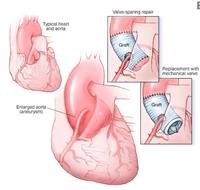
Do you feel a strong pulse near your abdominal area? This is a symptom of abdominal aortic aneurysm. Here are all the details about this disease.
Abdominal aortic aneurysm
Below we will learn the most important information about abdominal aortic aneurysm
Abdominal aortic aneurysm: symptoms
The abdominal aorta is one of the blood vessels that connects the chest and abdomen, and helps transport blood to different parts of the body. Sometimes the wall of a blood vessel becomes weak and bulges abnormally like a balloon. This is called an aneurysm.
Abdominal aortic aneurysm does not usually cause any obvious symptoms in the patient. It is often only discovered during an examination or tests performed to detect another medical condition. Patients with abdominal aortic aneurysm rarely develop these symptoms:
Constant pain in the lower back and abdomen.
Feeling a pulsation in the abdominal area.
When the abdominal aorta ruptures due to an aneurysm, it may cause the following symptoms
Pale skin.
Excessive sweating.
Accelerated heartbeat.
shortness of breath.
Fainting.
Abdominal aortic aneurysm: causes
The most common cause of abdominal aortic aneurysm is atherosclerosis, which weakens the artery wall due to the increased pressure of blood pumped through the aorta.
Chronic high blood pressure can also be the cause of abdominal aortic dilation, as the wall of the abdominal aorta consists of three layers that add strength and elasticity to the artery to withstand changes in blood pressure. Chronic high blood pressure may lead to the collapse of one of the layers and the aorta to expand continuously and slowly.
Abdominal aortic aneurysm: risk factors
An abdominal aortic aneurysm can form if the wall of the aorta becomes weak and bulges outward. There are some factors that increase the risk of this medical condition, including the following:
Older people: The risk of infection increases in men over 66 years old and women over 70 years old.
People with high blood pressure, chronic pulmonary obstruction, or high blood cholesterol.
Family history of the disease.
People with cardiovascular disease, such as heart disease or a history of stroke.
People who smoke or have ever smoked.
Abdominal aortic aneurysm: diagnosis
Doctors often discover abdominal aortic aneurysm by accident during a routine examination or when performing tests to look for other medical problems. Common tests for this disease include:
Ultrasound that will serve to images of the inside of your body.
Magnetic resonance imaging is used to images of internal organs using magnets and radio waves.
CT scan, which is used to take pictures of the internal organs after a medical solution is injected into the veins so that the doctor can see the organs clearly.
Angiography to see the amount of damage in the arteries or blockages in the blood vessels.
Abdominal aortic aneurysm: treatment
If you are suffering from bleeding inside your body as a result of an abdominal aortic aneurysm, you may need surgery immediately. There are two types of surgery:
1. Open repair
The doctor makes a large incision in the abdomen, then replaces the abnormal vessel with an artificial one.
2. Vascular stent grafting
This surgery can be performed without making a large incision in the abdomen so that you can recover more quickly. This surgery is safer for those with certain medical problems or the elderly.