comprehensive guide
Redness of the gums in children indicates gingivitis accompanied by other symptoms. Learn about gum redness in children in the following article.
Gum redness in children is often caused by gingivitis. Learn more about it below
Gum redness in children
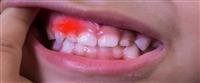
Redness of the gums appears in children when they suffer from gingivitis, which causes them to swell, swell, become irritated, and appear red. It is one of the diseases that affects the gums, but only slightly, and is more common in children than in adults.
Inflammation occurs when bacteria grow inside the mouth, forming a sticky layer that covers the teeth and the area around the gums and is called plaque. It later develops and forms a layer of tartar around the teeth if personal dental hygiene is not taken care of, as tartar attracts more bacteria to the mouth and leads to more gum infections. .
Causes of gum redness in children
Learn about the most important causes that lead to gingivitis and gum redness in children, as follows:
Inadequate personal hygiene, as parents do not teach children about the basics of personal dental hygiene using brushing and flossing, which are important for prevention.
Mouth breathing by children causes dryness of the teeth and gums, which later leads to gum disease.
Plaque builds up over time, causing tooth decay and gum redness and irritation if left untreated.
The hormonal changes that children go through during the different stages of their lives.
Problems that the immune system is constantly exposed to.
Malnutrition makes children''s bodies more susceptible to infections and gum redness than children.
Symptoms of gingivitis in children
Gum redness also indicates inflammation to which the gums are exposed, and there are other symptoms, such as:
Bleeding and swollen gums.
Gums appear dark or red.
Gum swelling or thinning.
Tooth roots protrude due to the gums receding from their place.
Bleeding gums when using a toothbrush or flossing.
Bad breath that remains even after brushing the teeth.
Treating gum redness in children
Gum redness in children can be eliminated by visiting a dentist, who will in turn get rid of the layer of plaque and tartar surrounding the gums.
The sooner doctors make a diagnosis, the more effective the treatment will be, which is why children should go to routine visits to the dentist that will detect any problems with the gums or teeth.
Preventing gum redness in children
Here are the most important tips that help prevent redness of the gums in children and exposure to any infections as follows:
Make sure to teach your child the daily hygiene habits that he must follow.
Start brushing your child''s teeth with fluoride toothpaste and brush twice a day when he turns one year.
Use dental floss to clean children''s teeth when the spaces between the teeth are closed.
Visit your child''s dentist regularly for evaluation and treatment of any dental or gum problems.
Observe if there is any redness or swelling in the gums, such as bleeding, or the appearance of an unpleasant odor from the child’s mouth.
Redness of the gums in children: appearance of teeth
Another common reason for red gums in children may be that teeth begin to appear from the gums, specifically at the age of 6-9 months, when the child’s movement is different from usual, as he expresses his desire to chew things more than usual.
Tooth growth begins in stages, starting with the lower front teeth, then the upper middle teeth, then the remaining teeth.
Children exhibit a group of symptoms that may be minor or painful and last for a longer period. Symptoms begin several days or weeks before teething. Symptoms include in addition to gum redness in children, including:
Redness and swelling of the cheek or face.
Rub the ear from the side where the tooth comes out.
Disturbed sleep.
Get food intermittently.
There are a set of tips that parents can follow to alleviate the symptoms of gum redness in children and other symptoms, such as:
Have your child rub his gums with your clean fingers to relieve sore and swollen gums.
Get your child soft items that he can chew on.
Give your child medications such as Paracetamol or Ibuprofen to relieve pain.
Use a topical gel for your child’s gums that contains anesthetic substances, but you should consult a doctor so as not to exceed the permissible quantities.