
Recently, some types of laser-assisted operations have increased, most notably cosmetic operations. In this article, let us learn about laser rhinoplasty.
In this article, here is everything you want to know about laser rhinoplasty
Laser rhinoplasty
Laser rhinoplasty is one of the techniques that support rhinoplasty and is used to treat some medical conditions. This procedure targets some simple and superficial nasal defects, such as: nasal curvatures and small noses, by directing laser heat directly onto the skin, which restricts the protrusion of the skin and shows it with a layer. insomnia.
Laser rhinoplasty does not suit all cosmetic cases and does not treat various nasal problems that require reshaping the nasal bones and making internal incisions. Rather, the laser may contribute to making the nasal bones somewhat smoother, which facilitates the work of other rhinoplasty techniques, that is, the laser It alone is not enough to provide the desired results.
Medical conditions that require the use of laser rhinoplasty
The uses of laser as a method for rhinoplasty are explained in the following cases
Treatment of rhinophyma, which is an enlargement of the nose with an abnormal increase in the thickness of the nasal skin as a result of a skin disorder called rosacea. This condition is treated by getting rid of skin buildup without laser surgery.
Removal of polyps from the nose using a laser.
Treating the surfaces of blood vessels causing bleeding in mucous areas.
Resection of the cartilaginous nasal hump and correction of the deviation, and this was proven in a study conducted on two groups to compare rhinoplasty with open surgery and laser.
Laser reduction of nasal turbinates.
How to perform laser rhinoplasty
Laser-assisted rhinoplasty is safe and does not result in any serious complications. It is performed in the doctor’s office immediately after a medical examination and does not require any special preparations before undergoing it because it does not require surgery.
This process takes approximately one to two hours and the patient can return to his normal life within just two days and after consulting a doctor.
The steps for laser rhinoplasty are explained as follows
Preparing the patient for the operation by giving him local anesthesia.
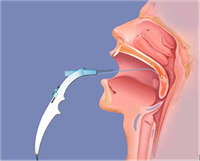
The laser beam is directed at the target area of the skin of the outer nose or at the nostrils.
Pass the laser beam several times over the area vertically until the skin receives the required laser heat that reduces the tissue under the skin to make it appear thinner or remove this tissue permanently.
Advantages and disadvantages of laser rhinoplasty
Different rhinoplasty techniques have advantages and disadvantages, and the following is an explanation of the advantages and disadvantages of laser technology:
Advantages of laser rhinoplasty
The most important characteristic of laser-assisted rhinoplasty is that you do not face the difficulties that arise with surgical rhinoplasty, such as: bleeding and bruising, and among its other advantages:
It does not require surgery, as it is a simple and bloodless procedure.
There is no need to put bandages or splints on the nose after the operation.
It does not require staying at home as it is an immediate process.
Disadvantages of laser rhinoplasty
One of the disadvantages of performing laser-assisted rhinoplasty is that the results are temporary and not final, because the main nasal problems have not been treated and there is a need to undergo other cosmetic techniques or re-laser rhinoplasty periodically.
This is in contrast to surgical rhinoplasty, which provides permanent results and treats nasal problems that laser rhinoplasty does not address.